First Flights
Mark Richardson’s Bearhawk 4-Place in Canada, C-GPFG
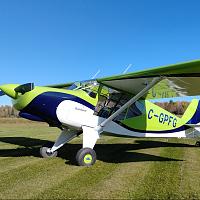
Mark’s scratch-built airplane has a Lycoming 540 with Bendix fuel injection and a Garmin panel. His friend made a video about the first flight, which is here:
Here is a link to a thread on the forum in case you’d like to ask Mark any questions or follow along with more updates:
https://bearhawkforums.com/forum/bearhawk-general-discussion-news/100232-scratch-built-bearhawk-4a-c-gpfg-first-flight
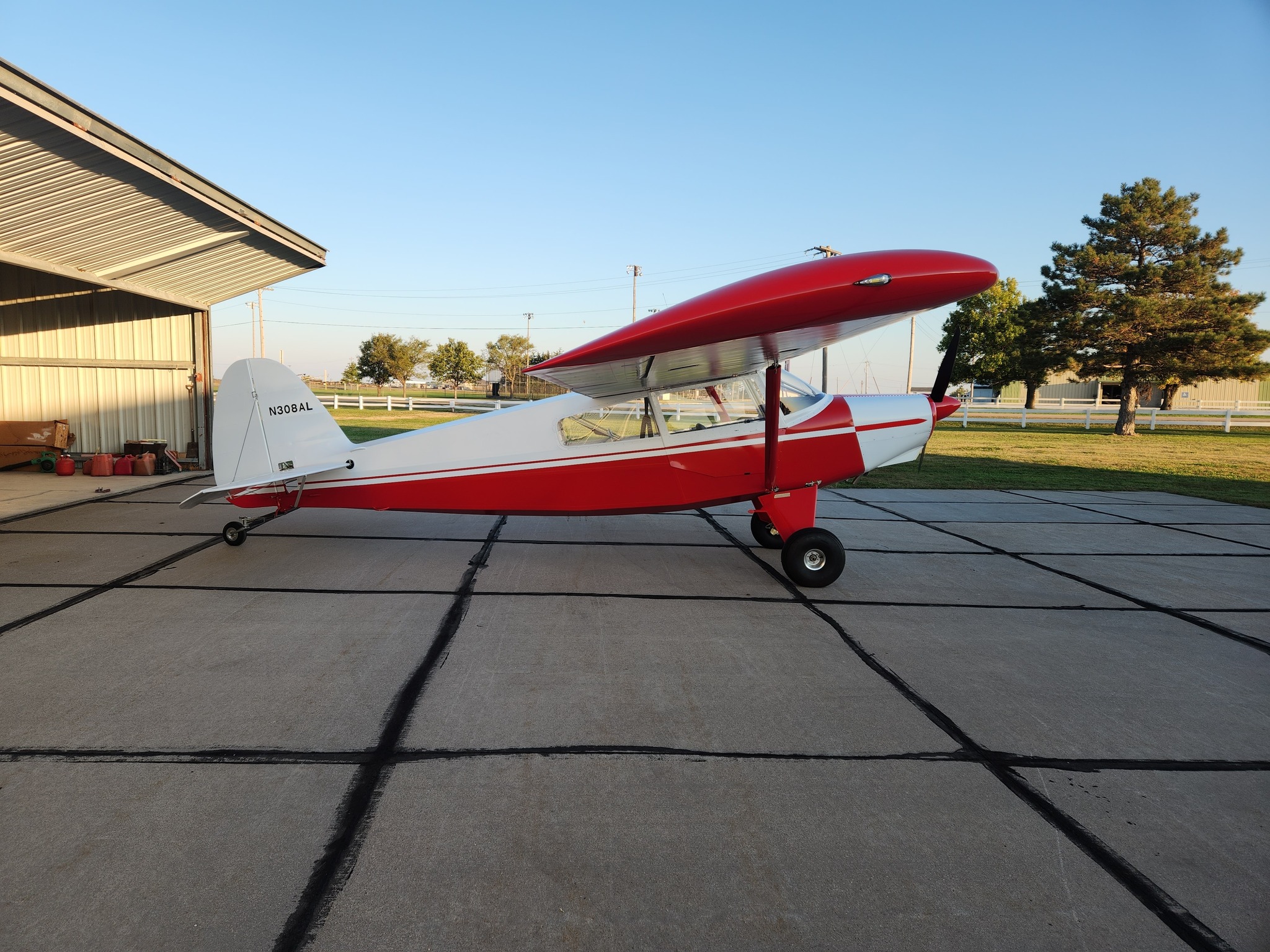
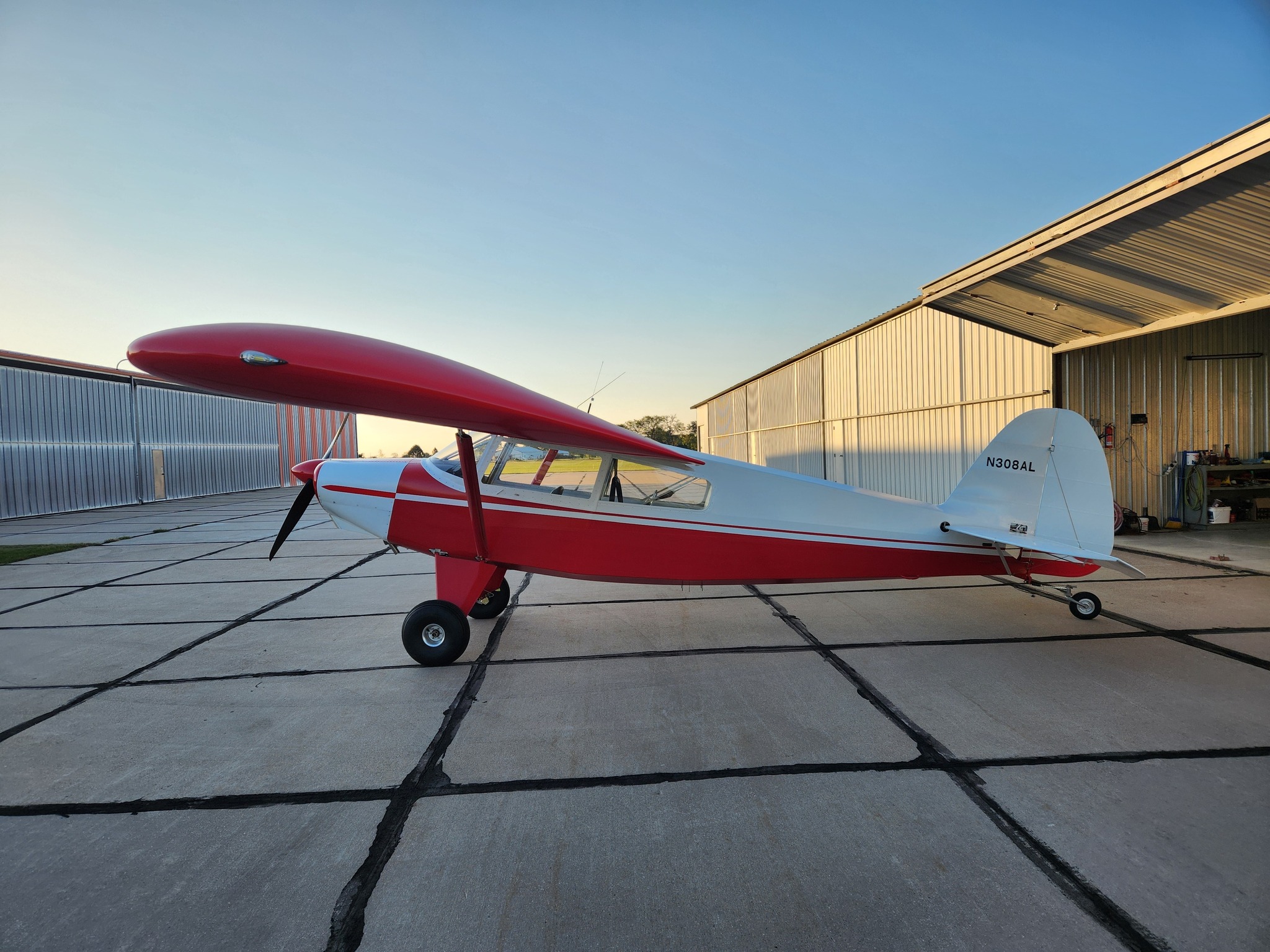
Al Lux’s Bearhawk LSA N308AL
Al lives in two different places, but before he went to his winter home, he successfully flew his new Bearhawk LSA. We eagerly await his arrival back at his other home so that he can resume flight testing and tell us more about his plane!
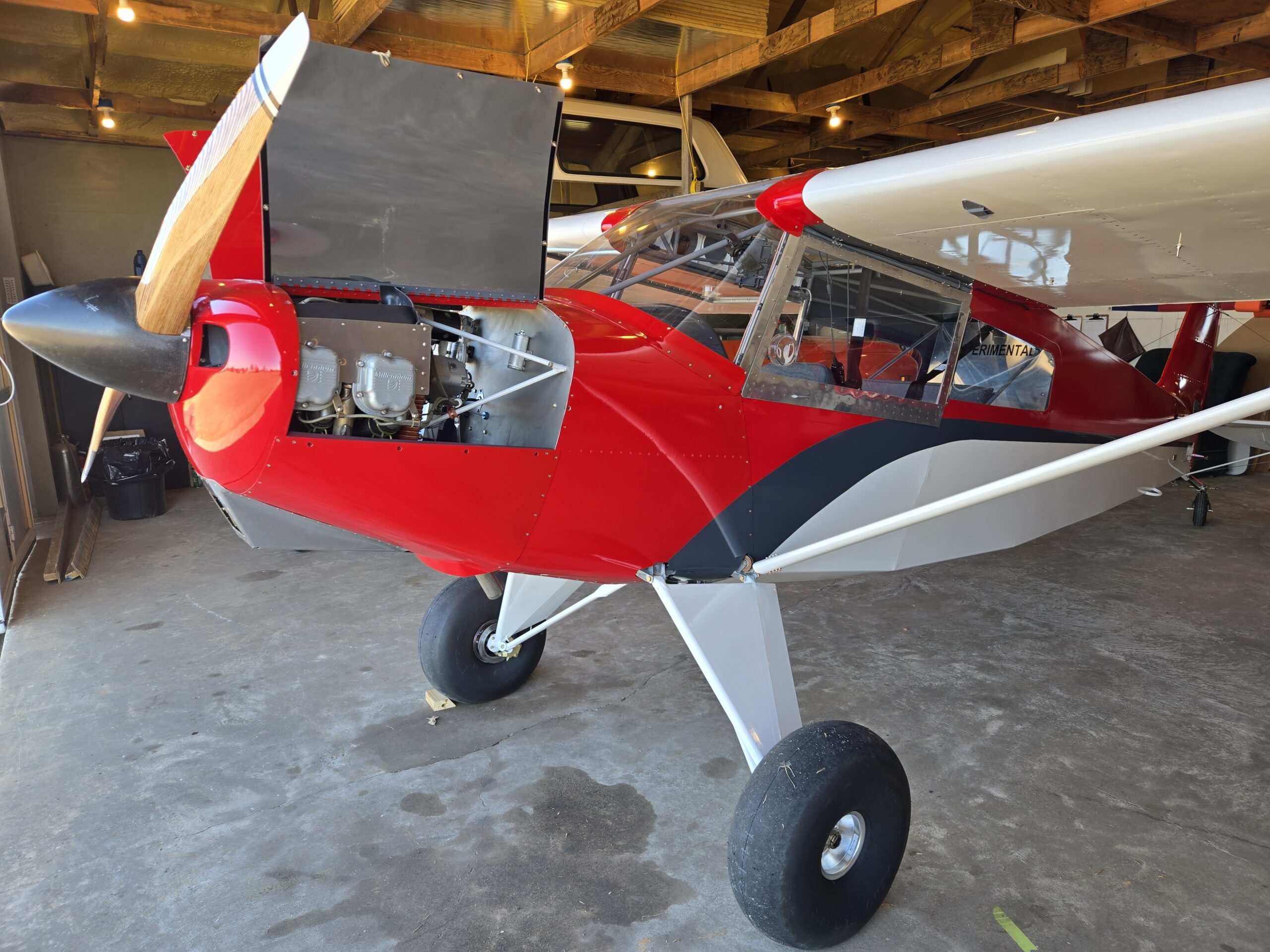
Frank Johnson’s Bearhawk LSA N964BW
Frank writes:
My impressions of the Bearhawk LSA after 20 something hours of flight!
It’s been a long 5 years of building, even though that’s the fastest I’ve completed a build yet. Not sure if that’s a testament to the kit or my growth as an EAB builder, Ha ha.
Now, I’m a low time pilot and doing my best to describe the experience, so keep that in mind. My flight experience is limited mostly to Experimental aircraft, Van’s RV6(200hrs), some Cub and Champ time, with 600 plus total time. Most recently in a Rans S7s(300hrs), Baby Ace (55hrs),and Aeronca 65TC(45hrs).
First flight was uneventful even though the plan was to do a few crow hops, it was off the ground quickly and I left power in too long for just a hop. So, around the pattern we went. There were no bad tendencies, no heavy wing, tracking was straight. Touchdown was a bit fast as planned since I hadn’t done any stall work. Approach was around 50 mph, once over the threshold and low I let the speed bleed off and mains touched, the tail settled down shortly after that.
From the beginning my plan was to do the task based in phase one using the EAA test cards. With the LSA several of the test are not applicable, no flaps, fixed pitch prop, no EGT, CHT. Its pretty simple plane.
Sometimes working on several test in a day, as many as three flights a day. Almost like a job, yikes.
Stalls are very subtle, power off around 30mph indicated it kinda mushes down as long as the ball is centered. With some yaw a wing drops, but nothing drastic, and recovery is instant when dropping the nose ever slightly with a touch of power. With this, approach speed is comfortable around 45mph.
Slips! Now they are impressive! Its like an elevator ride when doing an aggressive slip. Then soon as you straighten out the sink stops. What an awesome tool for short field landing. I’ve even come in fast on approach and slipped in ground effect to bleed speed.
Departures are short! Loaded, full fuel, off the ground in no wind is around 250ft. Remember, I’m pretty much at sea level 380ft field elevation. I’m certain this can be much shorter but being over pitched, 44″, in the prop and only make 2250rpm static and 2550 at full throttle. Current rate of climb is 900-1000fpm depending on load and density altitude. Current WOT airspeed is 125mph+- at 2550rpm. I’ve seen 135mph plus, but it was rough air and not sure how accurate.
I’ll be changing the prop to a pitch of 38-40″ later. Target rpm range is 2600 static and 3000wot. My personal goal is sub 100ft roll departure and 1500-1800ft roc with economy cruise100mph and WOT of 125mph.
My LSA is basic, O200 with a Performance Propeller. Empty Weight 785lbs. No Alternator, so I have what’s called a Total Loss Electrical System powered by an EarthX etx680c. With an AV30e, Trig-TY91 com radio and Starter. (With no engine driven Charging system the plane is not required to have ADS-B out for operation under Class B veil.)
Mechanical oil temp, oil pressure gauge, tach, and back up airspeed indicator.
The biggest challenge has been finding accurate oil temp and pressure gauges. I’ve gone thru a few. So much that I called GRT avionics and purchased another EIS4000.
The calculated hourly draw on the battery is now 600 milliamps (approximately 7.2 watts), this isn’t counting transmitting on the Trig or what the starter uses. The AV30E and EIS4000 monitor system voltage and is displayed continuously. This allows many hours of operation without recharging the battery, estimate is 8 plus hours.
In preparation for long cross country trips I’ve acquired and 30watt solar panel that has a controller, there are settings for different battery types on said controller. This will keep the battery topped off and allow charging my phone and iPad. It will be mounted in the left rear corner of the skylight, dimensions are 14″ x 14″ and weight is 1.6lbs.
I’m looking forward to flying adventures in the LSA, its going to be a great Day VFR traveling machine.
https://bearhawkforums.com/forum/completed-flying-bearhawks/100002-n964bw-flight
Leave a Reply
You must be logged in to post a comment.