Source: 2024 Q3 Beartracks, Greg Charest
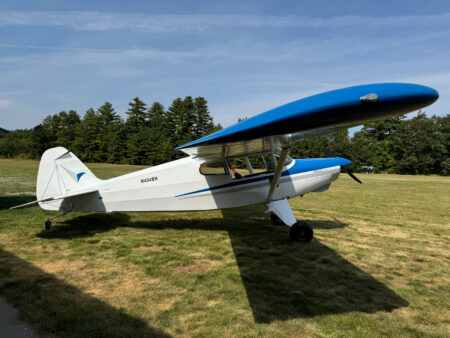
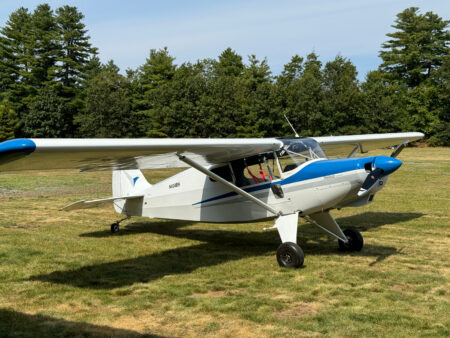
The project started in 2020. Since I had ordered one of, if not the first, Companion models and there were no flying examples, the original plan was to build it as quickly with the help of another experienced Bearhawk builder. Unfortunately, the COVID pandemic resulted in that being impossible and the build transitioned to a slower pace. Nevertheless, after 3 and ½ years and a couple thousand hours of work, N404BH received a special airworthiness certificate on 8/21/2024.
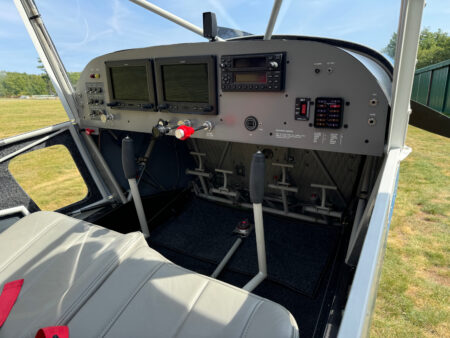
The goal was to build a fairly simple aircraft at a reasonable cost. To that end, the engine is a Lycoming angle valve O-360 overhauled by Bob Barrows with a fixed pitch Catto 78×56 propeller. Following the ‘keep it simple’ approach the magnetos are Bendix, the exhaust is from Vetterman and the electrical system uses an automotive style fuse panel. The covering is Stewart’s System and the avionics and engine monitoring system is a Garmin experimental G3X system with a GTR-200 radio, GTX-335 transponder and GDL50 ADSB-in receiver. The interior is a combination of fabric and Kydex plastic panels. One of the few luxuries is a set of leather seats built by Sport Aircraft Seats. I kept weight in mind but was not obsessive about it and with the somewhat heavier O-360 model the empty weight ended up at 1257 with a CG of 14.62.
I modified with a Vans Aircraft baffle kit and paid close attention to sealing up the cowl which has appears to have worked well. During ground testing and the first flight the cylinder head temperatures have not exceeded 350 degrees and the oil temp has been generally under 200.
The first flight was happily uneventful and other than a slightly heavy right wing, the airplane flies very nicely. The next step is to put on 2 or 3 hours at a high power setting for the initial engine break-in and then work through the EAA designed flight test program.
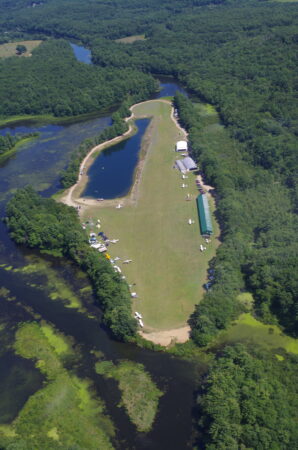
Greg’s plane is at Crow Island Airpark, 8MA4, in the photo below. It’s worth noting that he didn’t have electrical service during his build, so he did it all with a generator and a gas-powered air compressor!
Leave a Reply
You must be logged in to post a comment.