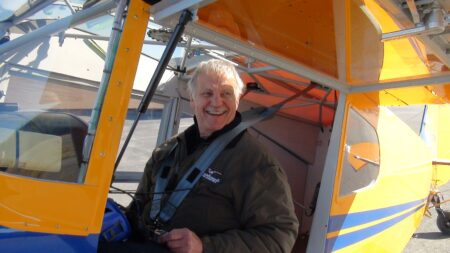
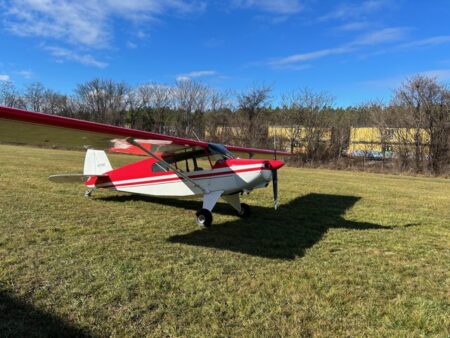
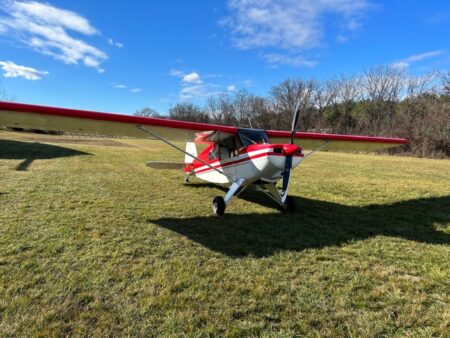
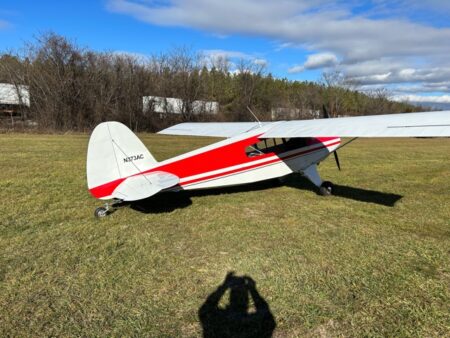
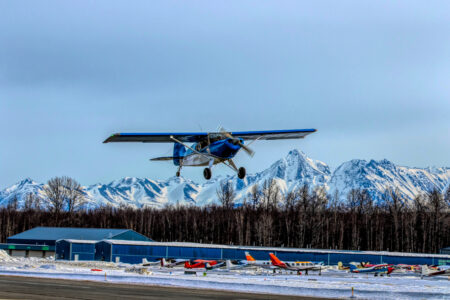
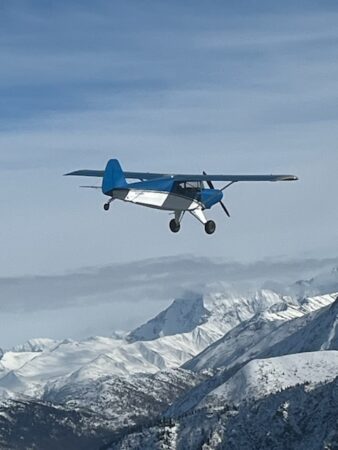
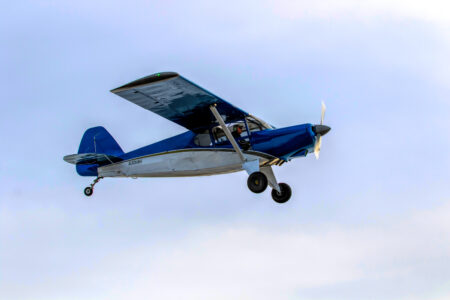
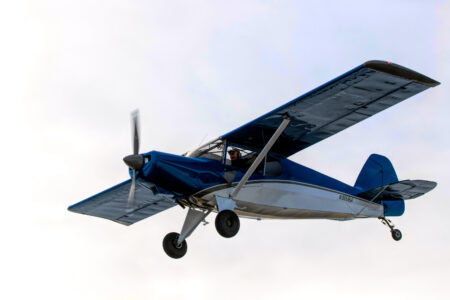
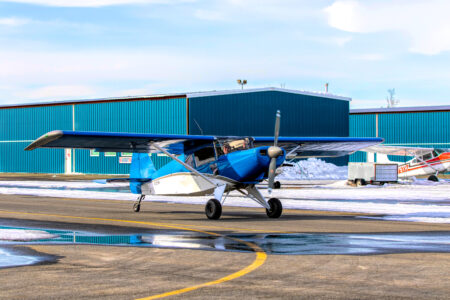
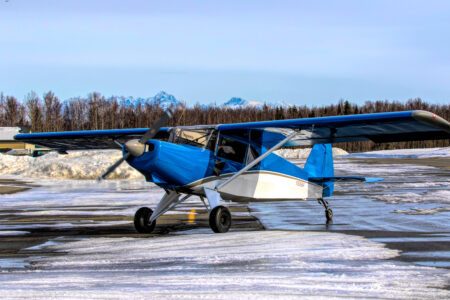
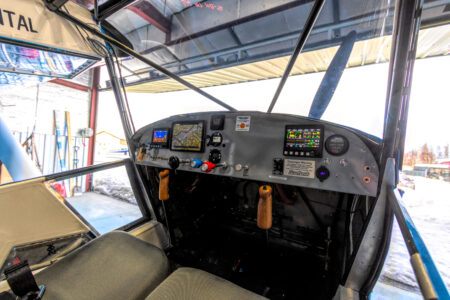
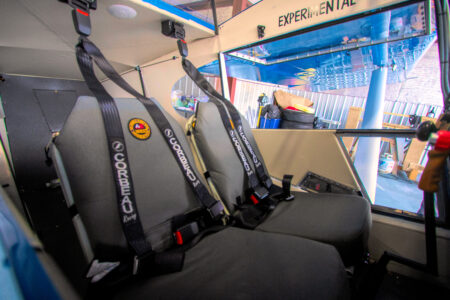
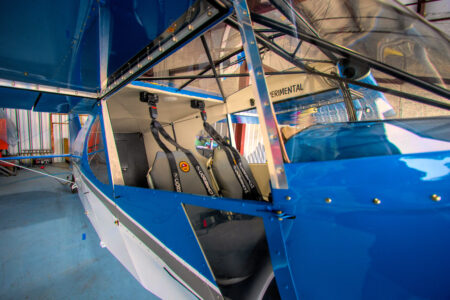
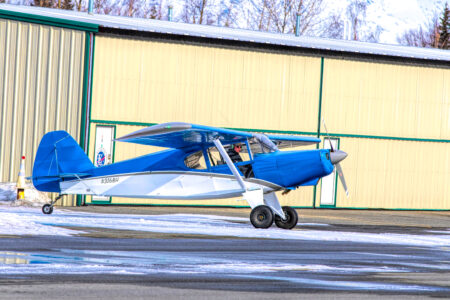
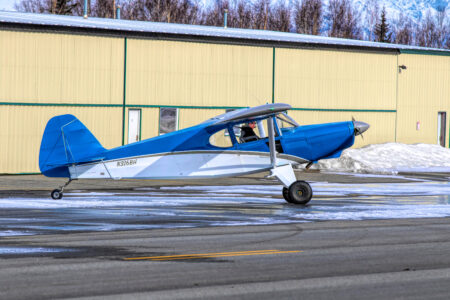
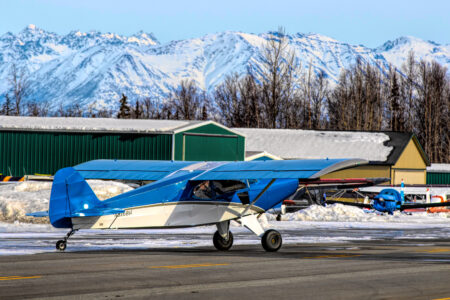
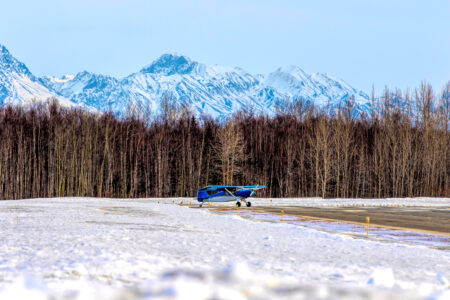
Bearhawk 4-Place N907PM First Flight

Source: 2024 Q2 Beartracks, Paul Minelga


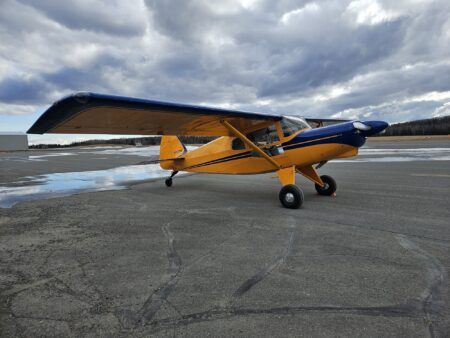
Jared was nice enough to ask me to write an article about my first flight in the Bearhawk, and since then I have been thinking about what that actually meant for me…first flight in an aircraft that I had built. So, my take will be a bit different than what others have written.
I had a fascination with airplanes as long as I can remember, but my desire to build an airplane started in the early 70s while attending high school in Lacey, Washington. I was 17, worked at an Olympia airport FBO and was on the way to earning my Private Pilot Certificate. A friend took me to Tenino to meet the Sorrell family and I saw a Hyperbipe for the first time. Little did I know that it was the first one made and in my eyes it was really strange, almost scary-looking compared to the Cessna I had been flying. After watching a short demo flight, my friend took me over to meet another man on the same airstrip who was building a Stolp Starduster Too in his garage. All I remember was this guy in the middle of a really, really cool workshop with a tube fuselage under construction and surrounded by lots of aviation-related organized chaos. I was astonished that this guy was actually making an airplane…from plans…by himself! Then and there I decided that I wanted to, somehow, someday, do the same.
Fast forward to the mid 80s. I had left Army Aviation in Germany to start another career in the FAA as a center controller in Alaska. I had since married a wonderful German lady and had a son, and soon had another son. We were pretty poor at the time, and as a single income household on a trainee salary in Alaska, money was tight. I didn’t fly privately, but I dreamt of building a Van’s RV-6 and built R/C airplanes as time and budget permitted.
Jumping in time again to 2003, I was well-entrenched in the FAA. I had built my own home, my oldest son was in college having graduated high school in 2001 and son #2 was a junior. By that time I had realized an RV-6 wasn’t the right aircraft for Alaska and nothing else in the homebuilt world looked like what I was envisioning. A good friend of mine named Rob Taylor showed me a picture of a Bearhawk. I immediately said: “THAT’S IT!…ummm…what is it?” That Christmas 2003, Santa (with a little help from Rob) gifted me Bearhawk plans #708 and that’s when the journey started in earnest. Rob and I went to OSH 2005 and had a blast. That’s when I met Budd Davisson and Mark Goldberg for the first time at the Bearhawk booth. Also, I got my first ride in Mark’s (now Jared’s) N303AP and my first taste of what a Bearhawk was like. Not long after I ordered a set of “quickbuild” wings, all the tubing and flat stock to make the fuselage, and started building a shop to put it all in.

This is my first kitlog entry. Notice the OCD force was very strong:
Date: 3-14-2008
Number of Hours: 1.00
Brief Description: First Longeron
I started by laying out the bottom of the fuselage on the jig table. All went well except I found that Station C “pinched in” about 1/8th inch on either side when a line was drawn between Station B and D. Apparently, this should be a straight line. I triple-checked my measurements and found them to be correct. I polled the BH group about this and the answer I got was that it should be a straight line. It makes sense that way anyway. I’m trying to be too exact in my measurements it seems. I guess officially, this is the first day of construction although I never got the longeron bent the whole way. I’m sure when it’s all said and done that I’ll look back on this first log entry and just laugh!

This is my last kitlog entry after 16 years and 4269.2 hours, interspersed with weddings, memorial services, births, career changes, camping trips, and just living life:
Date: 4-26-2024
Number of Hours: 40.00
Brief Description: The end of my Kitlog
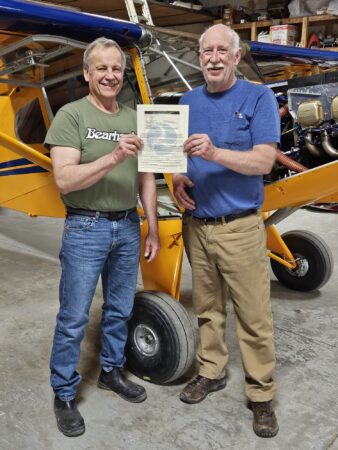
Well, this is it. The fairings and panels are all on and the project is complete. I put 40 hours of work on this entry because it spans the many days of the last two weeks that wasn’t logged, getting everything done in preparation for the DAR visit and reassembling everything afterwards. I taxied the airplane today and it’s ready for its first flight. That will happen when I get some refresher training. If you are reading this and building a project…keep at it. It’s not an easy thing to do. But if you do a little every day, it will eventually come together. Good luck!

I have to admit the first flight was a bit stressful. The tach had failed on runup, but it’s not required equipment. I had flown enough to judge RPM, but it did make me think twice and I almost taxied back. I lined up on the runway, but before I put the throttle in I paused a bit as per Ken Frahm’s (AKKen) suggestion. I went over everything in my mind again: I’m in an airplane that has never been in the air and I’ll be flying it at the waaaay upper end of its design speed envelope because the engine is brand new and needs to be run at 75% power or more to be broken in. Will the airplane fall apart? Probably not. I did the best I could and I know everything is right. Am I ready to land it if it make it that far? Yes. I can get it on the ground safely, it may not be elegant, but I’ll survive. A short prayer as the throttle went forward and the rest is, as we say, history. So it really wasn’t a first flight, but the culmination of a life ambition with the help and support of many good friends and family.
The Bearhawk performed very well and others before me have captured that in their first flight reports, so no need to rehash that. But here is a parting thought as I wrap this up. There are many nights I struggled in the shop making parts, remaking parts, correcting mistakes, making new mistakes, correcting those…on and on and on. There were times I just wanted to pack the whole thing up, drive it to a cliff overlooking Cook Inlet and dump it all in. Don’t give up. If you need to, take a short break, but don’t give up. Most times a good night’s sleep did the trick on helping solve a construction impasse.
If you want some inspiration, get this book and read it. It was gifted to me by my oldest son and it is a good read: The Propeller under the Bed: A Personal History of Homebuilt Aircraft by Eileen A. Bjorkman. On July 25, 2010, Arnold Ebneter flew across the country in a plane he designed and built himself, setting an aviation world record for aircraft of its class. He was eighty-two at the time and the flight represented the culmination of a dream he’d cultivated since his childhood in the 1930s.

Bearhawk 4-Place N316BH First Flight

Source: 2024 Q1 Beartracks, Scott Hoover in Alaska
N316BH, serial number 1266, is a plans build 4-place original model with some B model upgrades. I purchased the plans and many of the materials from a local man in Alaska who decided to go another direction with his build. It was built with a fair number of parts purchased from Bearhawk Aircraft and the VR3 Engineering tubing kit. N316BH has the original wings and tailspring but I upgraded the horizontal stabilizer, the door formers, and I re-enforced and strengthened the aerodynamic gear shock-struts with an internal round tubing. A skylight was added and lowered to match the wing across the top. I also reinforced the frame and welded a float kit along with ski cable attachment points.
The interior is simple and light with painted fabric. I kept my panel simple as well. I went with the MGL Xtreme EFIS and EMS along with a panel mounted iPad mini and two AHRS units that provide ADSB and air data to the iPad. All said and done I was pleased with my empty weight and CG. With the Bob Barrows O-540 and a metal two blade 84″ Hartzell propeller installed the empty weight came in at 1420 lbs. The CG is just aft of the forward limit with a pilot in the seat and empty fuel tanks. This leaves the entire CG envelope available for cargo, fuel and passengers. Impressive design for sure! My initial impression after just a few flights is WOW!!! What an incredible airplane! Very few things in life can beat that first flight! This was my first build and my first flight in a Bearhawk. After a couple of engine runs per the Lycoming instructions and a couple of taxi tests I was ready for the big event! After one more detailed inspection and one final run up I lined up on runway 20R at the Birchwood airport in Chugiak Alaska. It was a perfect day: 28 degrees, clear skies and little to no surface wind. The pressure altitude was well below sea level so I suspected great performance. Once on the runway I pushed the power up to 1200 RPM and let the plane slowly accelerate while taking one more concentrated look at the EMS, satisfied, I pushed the throttle on the untethered engine up to full power for the first time. She roared to life! I was thrown back in my seat with far more pressure than I have ever felt before in a single engine piston aircraft, it was at that moment that the smile came on my face and lasted for the next hour. The plane literally leapt off the runway before I even got the throttle to it’s stop. To my relief the airplane felt perfectly rigged and I rocketed to 3000′ at my planned 100mph climb speed. The first flight was all about engine break in and basic controllability checks. Fortunately, there are no issues other than some avionics problems that I’m still working through.
My overall impression of the Bearhawk is that it is perfectly designed for mechanically inclined individuals to build, even from scratch, with little experience in building aircraft. The great majority of the airplane is constructed using very basic metal working skills. The project took me nearly 7 years to “complete” as a hobby with many distractions along the way.
The plane feels light and even sporty in the air. It is wonderfully powered with an 0-540 and stable at high and low speeds yet still extremely responsive to flight control inputs. I look forward to exploring the entire flight envelope as I work through my flight test profile.

Fall 2023 New Owner Update for N6408C (built by Rob Caldwell)

Source: 2023 Q4 Beartracks, Jesse Clement
As an owner of a J3 Cub for many years I have always been adamant about the low and slow grassroots type flying. My wife and I began looking for something with 4 seats that we could comfortably travel in, haul more gear and something that would all around be more practical. Initially, and understandably, I looked into the Cessna 180 market. After running into a multitude of airplanes that didn’t meet expectations I became quickly frustrated in the airplane hunt. A great friend of mine found Rob Caldwell’s Bearhawk listed for sale, and after looking through it I immediately gave Rob a call. I believe it was the second day it was listed and he said there was already a multitude of callers! I had several conversations with Rob about the airplane and binge watched all of his build and flying videos. Quickly we decided it seemed like the right airplane for us and then scheduled a time to run down to Lake Norman to pick up the new bird!
To be honest, I wasn’t very familiar with Bearhawks until seeing the listing. After talking to Rob and Rollie several times about the airplane I was very excited about the performance numbers the aircraft could achieve. So far the aircraft has exceeded my expectations with a 1,000-pound useful load, 200-400’ takeoffs and landings, 115-120 knot cruise speeds and around 11 gallons per hour. In my opinion for a 4 place, tailwheel aircraft you can’t beat the Bearhawk!

Bearhawk Five Flight Testing – Tyler Williams

Source: 2023Q4 Beartracks, Tyler Williams
Some people actually know what they are doing. Me? I’m a novice. Prior to this project I had never built, rebuilt, or performed any significant repair to an airplane. Yet, here I am, 2 ½ years after receiving my Bearhawk Five kit, with a finished airplane.
Now, with my newly gained builder experience and a paltry 250 hours under my belt as a private pilot, I become a test pilot.
It has been 10 minutes since the FAA inspector shuffled his pile of papers into a folder, stepped into his car and drove away. Freedom. I preflighted N521TY twice the day before and then again with the inspector today. She was fueled up and ready.

I’m in the cockpit now, staring down runway 04. The big Lycoming O-540 is growling happily, ready and waiting for me to push that throttle full forward and give it the first taste of freedom. I go over a plan again in my head, “Accelerate. Verify airspeed alive. After the heels break ground, level off 5 ft above the runway and quickly confirm correct control authority, pull and maintain a shallow climb out to keep things cool. Watch temps. Keep climbing if all is well. Level off at 5,500 ft. FLY. Enjoy. Simulate an approach and bring the airspeed back to the onset of stall buffet and recover. Record speed and jot down an appropriate first final approach speed from there. Return to the field and set up an approach. Execute a three point landing with no flaps. Have a beer and celebrate.”
Ok, I exhale, push the throttle forward and my back gets pinned to the seat. The acceleration feels like I have let an animal off its leash. The tail is up. Wow! The handling is easy on the ground. By the time I reach full throttle she is light and ready to fly. She’s
up! I rock the wings and wag my tail, and then start climbing. 100 ft…200 ft…400 ft…600 ft…then WTF!?
My back comes off the seat under deceleration as I hear the sickening sound of an engine losing power. I drop the nose instinctively and glance at the airspeed. 75 kts. Ok, keep pressure on the nose. The throttle is still to the firewall. RPM stable but lower. Not climbing much now, but I haven’t lost all power, just some…a LOT. S*#@T, come on, really?! I glance at the adjacent runway as a bailout option and make a left turn towards it. It would be a super steep approach with a hard slip to stick in on the pavement from mid-field at this altitude. I could maybe do it, but I have consistent power and level flight now with no hiccups, just not full power. I do a quick instrument scan. Everything is in the green. Ok, left turn to downwind for runway 04. Maintaining 600ft. I try for a quick diagnosis as I fly the downwind. I leave the throttle firewalled, since it hasn’t moved and I don’t want to know what it may do if I move it. The prop responds normally but doesn’t help. I make a small mixture adjustment. Still no change. Then I hear the RPM waiver up and down briefly and then back to the same power. Is it the governor? Hell, I don’t know I need to land this plane and find out on the ground! Instrument scan…everything is still in the green. Now, how about that approach speed? So much for a simulated approach to figure out how she behaves. Oh well. I know how to land an airplane. We flew some 60 kts, no flap approaches during my Bearhawk transition training, so that should be good. Ok, 60 kts and no flaps because I haven’t tested those yet. I pull power, roll trim for 60 and notice how similar the control and trim response are to the 4-place I flew. In fact it all feels familiar to my hands, which is comforting at this moment. The landing approach is very brief since I’m only at 600ft, but in that time of intense focus I still manage to feel joy and pride when I notice how well the airplane is handling on glide. It was just as I imagined it would be, like a dream. I feel no friction in the controls, just fingertip pressure with immediate and predictable response from the plane. I’m over the threshold now, entering ground effect and rounding out. I think to myself, “Wow, she sure is docile.”

Float, flare, and grrrrrrease. First I smile and think to myself, “What an amazing airplane.” Then as I slow to taxi speed, I instinctively push the carb heat knob back in, and all those joyful thoughts are quickly replaced by the original “WTF?!” Nothing seems out of place. The engine is happy now and the instruments are happy. Maybe it was fuel flow, maybe something else. I taxi over to my hangar and do a runup to test everything again. She throttles up just fine and sounds great. I do a mag check, cycle the prop, test the mixture response, check the carb heat function, and then a full power static RPM check.
Everything seems ok. I disconnect the fuel line at the carb and do a quick fuel flow test. Everything checks out. I still have no idea what happened. But then again, I’m a beginner at ALL of this. Time to make phone calls. First, I glance around the panel and sit for a moment to think. Briefly, I have the thought, “I don’t remember pulling carb heat for my approach, but I remember pushing it back in while taxiing.” Weird. Must have done it without thinking. It definitely was pushed in for takeoff as I remember checking that as part of my runup checklist. Besides, the power loss was sudden and didn’t happen until I was at 600 ft. So, that couldn’t be it.”
The phone calls to various experts sparked a series of ideas and things to adjust that could diagnose/fix my sudden power loss/RPM drop issue. None of these uncovered the issue. I check adjustments, follow all recommendations and do another full power runup, as advised. All I can do so far is trust the people that actually know what they are talking about. As I reach full throttle I notice the carb heat knob creep out maybe ½”. Now THAT catches my eye! Suddenly things start to make sense and I start to get happier as I realize my engine is fine after all. Something is amiss with my carb heat box. Could it be opening itself when hit with enough air pressure? It is a brand new design after all and I’m the first one to fly with it. Time for another test flight. And this is what phase 1 is all about.
I crawl back in the cockpit, fire up the beast and make a new plan to depart the crosswind runway. In the event I need to abort on climb out, I can turn and land into the wind on the adjacent runway. I line up and firewall the throttle. I see 2700 RPM and she’s off! Climbing out, I glance at the airspeed and as I pass through 80 kts, the carb heat knob shoots out and the engine chokes again. AH HA! I push it back in and full power returns. I have an answer…well half of it anyway! Man that feels good. After a spin around the pattern I come back to land. The carb heat is being blown open after about 80 kts. It’s a strange design issue, but it should be an easy fix. Replacing the standard push/pull cable with a detented one will keep it locked in any position. But why such a drastic change in RPM? Seems like it was really choking the engine rather than causing a small RMP drop. It turns out the carb heat shroud that I installed was not allowing adequate airflow. It wrapped too far around the exhaust and needed further trimming. The education continues.
The following weekend, I fuel her up and set off into the sky to test the new cable and modified shroud. This time on climb out, the carb heat stays put and the engine runs beautifully. I continue my climb to gain some decent altitude and think about the initial series of flight maneuvers I finally get to do. Then I glance down at my engine monitor. My oil temp is at red-line and climbing! Come-on, now what?! I abort the flying tasks yet again and quickly return for a landing. Back on the ground, I pull the cowling off, check the baffling, check the oil cooler, disconnect the oil cooler lines and ensure oil is actually flowing and on and on. Everything seems good. Time for phone calls again. After a series of ideas that were all checked off, I hear, “It could be a bad Vernatherm.” I say, “Oh the Vernatherm. Yeah I’ll check that.” I did not say to my friend what I was really thinking…”What the heck is a Vernatherm?” The education continues. I learn what it is, how it works, and how to remove and inspect it for correct function. Sure enough…bad vernatherm. I install a new one and wait for the weekend to arrive with great anticipation.

What will the engine monitor say this time? Will I get to fly for more than 5 minutes before I’m forced to land and troubleshoot something else? Will I get to enjoy a nice flight? Maybe I’ll get some altitude for the first time and do some maneuvers? And I did.. Finally, I flew my new Bearhawk Five and landed when I wanted to. The carb heat stayed put and didn’t choke the engine when applied, the oil temps were perfect. The engine was truly happy, and so was I. Since the first couple weeks of troubleshooting I have been enjoying a wonderful airplane. I continue to learn and refine things each time I fly. This 40 hour test period is a valuable time. I’ve sorted out a heavy wing and have her flying hands off at cruise now. I’ve fiddled with the gas caps and finally dialed in how to use them with little to no cussing. I tightened up the trim tabs as others have done, to remove the play and vibration in them. I added some turbulator strips to the horizontal stabilizer struts. She feels super smooth now. The airplane continues to get better, and more refined with each test and tweak, and so does my technique, knowledge and experience. The flight testing is fun. Maneuvers are fun. Stalls of every kind are very fun…way better than circling the field for hours and “flying off the time.” I’m working on my short field techniques, learning what the airplane likes and figuring out how to get the most out of it. To say I’m enjoying it is an understatement. Being a pilot again feels amazing. The 2.5 years spent building now seems like the blink of an eye. I’m back in the cockpit now, doing what I love.
The numbers I have at this point are not really news-worthy. It performs as advertised for an unmodified, kit-built Bearhawk Five and I couldn’t be happier about this. The takeaway for me so far is that the learning thankfully never stops. The test period has not been mindless circling to burn off time. It has been an education. I have more textbook testing procedures to perform during this phase 1, and then lots to work on after that. To really take this plane where it was intended to go, I’ll be testing and learning far beyond the 40 hours around my airport. This is not a $100 hamburger machine after all. It is a tool for exploration. For now, I’m still a novice, but each new step out of my comfort zone and each step closer to the edge of the envelope adds to the bucket of knowledge, experience and stories to tell. And that is what it’s all about.

Oriana Kononchuk’s Bearhawk Patrol – C-GRWL

Source: 2023 Q4 Beartracks, Oriana Kononchuk
I started my Patrol in February 2022 and finished it in September 2023. It has a Lycoming 0-360 with a 82” Sterna Ground Adjustable prop, 29” Alaskan Bushwheels, and a 10” BH tailwheel. I also got an idea to put a wrap over fabric from a guy in the US. I designed it and had a friend who owns a company called MPrint Signs and Solutions in Edmonton, Alberta take the project on. This was their first airplane wrap and they did an amazing job! I kept interior as lightweight as possible, and it weighed in at 1164 pounds empty. For panel I kept it simple, with an ILevil which acts like a glass panel on your iPad. Love it! And This beast performs! The first time I took it up I was so impressed with how fast and docile it was. I’m a new tailwheel pilot and I trained in a Citabria. Well it was a completely different beast when I first took off on my own with the Patrol.
Smooth controls and 45 degree banks were a breeze. I had trouble slowing down on final and had to overshoot a few times before I landed. It really wants to glide. I have Clamar amphibs for it so looking forward to some float flying. Also will be getting a belly pod to be able to put gear in as the small compartment at the back isn’t enough for a week in the back country. All in all I’m completely satisfied and am grateful I had an amazing builder assist-Shane Madson with Madcustom Cubs. I was there for every part of the build learning and wrenching from a talented builder. Oshkosh is on my list for 2024!

Patrol First ZK-MAY Flight – Matching Electric Tug

Source: 2023Q3 Beartracks, Graham Johnson
I have done 5 hours now and couldn’t be more happy with how it flies. I built this patrol from plans and used a QB wing kit, I have a 0-320 and although it is smaller than most peoples choice it preforms very well. Takeoffs are airborne in about 325 feet, climb rate is around 1300 ft/m and cruise is 110 knots at 2400 RPM. I’m pretty pleased with that and the 0-320 runs very nice with no cooling issues.
To help with moving the plane around, Graham built this cool electric tug, scavenging the parts form a mobility scooter and painting the whole thing to match!

Joe and Mike Mason’s Bearhawk Patrol First Flight—N357MB

Source: 2023 Q2 Beartracks, Joe Mason
My father, Mike, and I received our Bearhawk Patrol QB kit in September 2018. I was confident it would be airborne in 18-24 months. After a humbling four years and four months, on January 16th, 2023, N357MB took flight with Dad at the controls. The first flight was successfully uneventful, just as we hoped it would be. I took the second flight on January 20th. It was also uneventful, but after two hours in the sky there was a laundry list of items to fix and troubleshoot. We have slowly been working out all of these issues and we are very close to having everything addressed. Being focused on engine break-in we have not done much flight testing (stalls, slow flight, maneuvers, etc.) For the little bit that we have done, the performance has met or exceeded all expectations. We have experienced 200’ takeoffs, 1800 FPM climbs, 150+ true air speeds, and sub 40mph stalls. With our field elevation at 4150’ MSL, these numbers are better than we could hope for. The Twin Falls Idaho winter left us waiting on better weather to finish our testing.
The engine is a 200HP ECI O-375 with 9.0:1 pistons and a Hartzell Trailblazer Prop. Fabric and Paint are Airtech and the the panel includes the Dynon Skyview HDX. We like the polished wings a lot. Dad has owned a polished Luscombe for 50 years, and this seemed to fit right in. During the test flights, here are some of the items on the laundry list:
Tailwheel chain clips bending open and coming loose during taxi, Fuel cap venting, Small oil leak at front of engine, Airspeed indicator malfunction, Dynon always showing a headwind, Tailwheel shimmy, Rudder trim, Heavy wing, Stalls not breaking straight forward, and Static port issues. None of these issues were detrimental to the safety of our flights. They are very typical items to find on test flights. We have addressed most of them, but are still dealing with a few of them. My hope is that that other builders can learn from our experiences.