Installing the Wooden Tail Streamlining Parts

Source: 2011 Q4 Beartracks, Glenn Patterson11q4glenn2
Bob Barrows has tested the airfoil shaped ribs on the Patrol with good results on the Hor Stab and Vert Stab. Theoretically, there might be a 20% increase in lift or the same amount of lift but with 20% reduction in drag. It may allow the four degree down deflection of the Hor Stabs to go to three degrees. Flow over the Hor Stab surface will have less turbulence & therefore slightly more positive/smoother pitch forces. With more lift it is possible there would be more control authority. But it should mostly help with pitch stability. The airfoil shaped ribs on the Vert. Stab should result in somewhat more yaw stability.
No one has flown a four place Bearhawk with these airfoil shaped tail surfaces yet, but Bob feels confident there will be some improvement although how much is uncertain until flight testing can happen. Bob feels certain there will not be negative consequences. So – Glenn Patterson has decided to try this mod to his Bearhawk using instructions provided by Bob.11q4glenn1
Glenn: Pieces of plywood were clamped to the flat side of the channels to aid in alignment. This first picture shows the work prior to commencing gluing the strips on. We used a notched board to do the initial clamp then used small wood strips and electrical tape to hold the pieces until the epoxy set. The electrical tape was used as it is slightly stretchy and would enough pressure on the wood so as not to squeeze out all the epoxy. 11q4glenn3We glued the strips on both sides of a rib as one step. All the wood surfaces used in the clamping process had parchment paper (used for baking) between the wood clamping pieces so they would not become part of the airplane. Wax paper would work as well. The parchment paper came off nice. The elevator ribs were sanded to bare metal, degreased & T88 epoxy used to secure the strips. The pictures show the process fairly well. We are using Stewart polyurethane and probably could have just scuffed the urethane and glued the strips to the painted surface. We did a sample glue on a painted surface and the wood broke off leaving wood attached to the painted surface. Definitely a strong bond either way. The tail turned out very nice. Best regards, Glenn Patterson11q4glenn4

First Ever Bearhawk Death Valley Fly-In

Source: 2011 Q4 Beartracks, Calvin Brubaker
11q4cal1aWinter seems longer and colder here in the Salt Lake area every year, and it’s even colder and longer in Elko, Nevada, home of fellow Bearhawker Mike Creek. With the benefit of our fine Bearhawks we often seek warmer climes during the winter months. Mike and I began discussing Death Valley and the Chicken Strip in mid-December and tentatively planned on a 3 day weekend in mid-January. Mike had been there before, I hadn’t, and it’s always nice to have the resource of some local knowledge along. Mike and I have met up in the Idaho backcountry each of the last 4 June’s, and the Bob has camped with us during 3 of them. Mike has led me around that area and it has been a gas improving my flying and camping skills with him, and many other pilots from the Backcountry.com forum. I have photos of all of us, including Bob, in the Sunflower Hot Springs along the Middle Fork of the Salmon River, but have agreed to keep them private until after all of us departed this earth! Just a shameful tease to get a few more Bearhawks to join us the weekend after Father’s Day at Johnson Creek, ID.11q4cal2
Back to Death Valley; Ron Apfelbaum, a friend from my airport (KBTF) and C180 driver and I met at 8:30 Friday morning and helped each other push our loaded planes out of their respective hangars. It is amazing how hard it is to ground handle a Bearhawk with 8:50’s at 18 PSI, 72 gallons of ethanol free auto gas, a mountain bike, cooler, survival kit, camping gear, etc, etc, etc. Ron is a retired surgeon and is currently building a Backcountry Cubs SQ2, and doing an excellent job of it! Soon we departed to Tonopah where I would take on a little fuel, and we’d run into town for a quick lunch. I flew at about 21” and 2300 to stay a little more matched with the 180. Generally, if I’m not in a rush, I fly low and slow at 19” and 1900-2000. Ron landed and was taxiing back to the ramp when I landed. We had a bit of a tailwind so our flight time was less than 2.5 hours. Mike landed in KTPH after we had headed into town, but hitched a ride into town and found the “airport car” we were in parked in front of the convenience store/Subway/Burger King and surprised us by walking in as we were walking out.
11q4cal4
The three ships (two Bearhawks and a C180) departed Tonopah in very loose formation bound for the Chicken Strip, and the adventure of spending time at a true oasis! The Chicken Strip is located in Saline Valley, one of the valleys in Death Valley NP, and a very unimproved area of the park. We were surprised to find a couple in a vintage, polished C170 getting ready to depart shortly after we arrived. They had heard of the place, and just stopped in for a quick visit and soak on their way from Southern to their home in Northern California.
We established camp quickly, each of us by our aircraft, and got out our MTB’s and rode the .5 miles to the Lower Oasis. Mike and I enjoyed our first soak with a California couple who had driven in from Monterey in a 2WD Honda CRV (so much for the stories of how bad the road in is), some 4 hours on not great dirt roads.(Note, they spent more time driving dirt roads than we spend in the air all the way from our homes!) After checking things out, Ron headed back to camp to get the charcoal going for the fine dutch oven dinner he prepared for us that night. Meanwhile, Mike and I enjoying the 100 degree water, spied a traditional yellow SuperCub shod with not so traditional 31” Alaska Bush Wheels flying overhead. Sure enough, I was our friend Joe Dory from Austin, NV coming down to join us! (He also goes by Pops Dory as his son is also named Joe. Both are crack BC pilots. Look up popsdory at youtube.com and you’ll see a little of what I mean!!!) Due to his colonoscopy appointment, we were not sure if he’d make it that day, or Saturday. The evening included a great campfire of desert sagebrush, hot dinner with fresh bread and cookies not from any store, a little drinking by those who do such things (while I nursed Diet Coke), and a lot of hangar flying, recounting many a backcountry adventure. Saturday morning, we saddled up our trusty planes, and struck out for the more developed parts of DVNP. We flew low and slow down the Saline Valley, made a sweeping left turn to see the “racetrack” up close and personal.
11q4cal3We then cruised up for a view of the Ubehebe Crater, followed by a quick aerial survey of Scotty’s Castle, and eventually on to Furnace Creek where we enjoyed their famous Saturday Morning Breakfast Buffet. We checked out the amenities there, discovered that they have live country music on New Year’s Eve, then departed for Furnace Creek.
There is not much but desert between Stovepipe and Furnace creek, and it is interesting to note that I flew several miles with my altimeter reading -100, all the time looking at the yellow cub, which was even lower than me. The official altitude at Furnace Creek Airport is -210, and 10 or so miles south of FC, is the lowest altitude in the park. We didn’t go down there because the hot pools were calling our names! Furnace Creek is a lovely resort in a Cirrus or RV10 kind of way. Great looking golf course, lots of palm trees including a “date orchard,” naturally heated swimming pool, tennis courts, etc. They rent bikes, and you may even rent a Jeep if you wish to drive to the oasis. Furnace Creek also boasts a wonderful mining museum with quite a few actual mining implements behind the building, and a couple of eating and drinking establishments, and we learned that they have Rock Music on New Years. Joe was there this last New Years and said that he and his wife did not hang out too long due to the “loud noise”, before they climbed into their sleeping bags under their airplane wing at the paved strip and celebrated by watching the stars. It is interesting to note that they currently do not have avgas as the airport, contrary to what the chart and the internet may say.
We bee lined back to the Chicken strip, and no one was hungry for lunch due to the late and large breakfast. That afternoon we again soaked, with quite a few folks including two guys who had ridden in on KTM motorcycles loaded with camping gear. No matter where you go, folks are so interested in hearing about our airplanes, and especially the ones we built ourselves. Of course there was some fishing for plane rides, but unfortunately time would not permit any test rides that afternoon.
Another night of over eating and hangar flying and I think Mike, having proved that it is indeed possible to sleep in a Bearhawk, decided to take it outside so he could stretch out a bit more for the second night. After giving most of our surplus food to the “campground hosts,” who claimed that they had been there 3 months now and had not had to leave for a grocery run yet, we headed West over the hills to Lone Pine, CA. There we found the Alabama Hills Bakery and Deli and one of the best fly out breakfasts ever. The actual hills, just West of town have been the location for many Hollywood films, including most recently Iron Man, as they look very much like Afghanistan. Many westerns have been filmed there also. We all took on a bit of fuel here at $6/gallon, then headed up to Tonopah to top off at $5/gallon. Joe, left us during this leg and headed back to Austin. Back at KTHP, the 3 amigos got our fuel in the now freezing South wind, shook hands and departed.
Ron and I decided to return via Wendover, as the Wx was not looking great in Salt Lake, and if we got stuck over night, Wendover would be a better stop than Delta, UT! With the great winds, I was seeing ground speeds of between 150-160 KTS which is pretty fast in a Bearhawk. Watching the dust “boil up” over to top of some, but not all, of Nevada’s dry lake beds was interesting as we high tailed for home. We turned right as soon as we could near Wendover and the restricted airspace to stay upwind of one of the dustbowls. We made it back to KBTF, just north of KSLC, just before dark, and with the 30 knot wind blowing right up the gut, landed with a ground roll of 50 feet of so! Mike reported a ground roll of 30’ at KEKO! This trip met or exceeded all of my hopes and expectations! The weather was beautiful at the park and the Chicken Strip, with highs near 70 and lows just below freezing. We met interesting folks, discovered much of what DVNP has to offer, and Mike and I did it in style in our Bearhawks. How sweet to have a reasonably fast XC machine, which can land plenty short on less improved runways, dirt roads, etc. AND carry all the stuff and/or persons we want.

Ted Calahan First Flight Report

Source: 2011 Q3 Beartracks, Ted Calahan
On Tuesday October 11, 2011 Bearhawk11q3ted
N962TD committed aviation for the first time and it was great! I took delivery of my Quick build fuselage in February of 2007 then the wings in the summer of that year, so my Bearhawk odyssey has spanned over four enjoyable years of building. Building for me is as much fun as flying!
I picked the Bearhawk for a number of reasons. First and foremost, I wanted a good performing taildragger that could haul my family of four. Having built and flown a Kitfox kitplane and a Nieuport 11 plans-built fighter replica, I felt relatively confident of my building abilities, and I was itching for another project. I visited with Mark Goldberg and his bird at the EAA Southwest Regional Fly-in back in ’05 and that cemented the decision. Two years later I started building Tango Delta.
I toyed with engine choices for a couple of years before finally deciding on a Bob Barrows O-540 and a new Hartzell CS prop. I chose lower compression to allow me to burn MOGAS. For instrumentation I went totally glass with a Dynon D100 EFIS and D120 EMS. A Garmin GPSMAP 696, GTX-327 transponder, and SL40 Com round out the panel. I went ahead and installed roll and pitch servos to take advantage of the EFIS integrated autopilot. Although the electronics take a little getting used to, I’m really enjoying them. Identifying out of parameter readings is easier and the ability to download data is awesome. No more trying to jot notes on performance while flying. That made a big difference during my maiden flight. I was able to concentrate fully on flying the plane.11q3ted2
Tango Delta was completed with the Poly Fiber process with Aerothane as the finish. The Bearhawk is the third fabric plane I’ve built using Poly Fiber. The process is durable and reliable. I’m a complete believer in the process and am very comfortable with it. The interior is flocked fabric using flocking materials from Donjer. The only professional assistance I sought with the project was the seat upholstery. I chose Confor foam, and I made the right choice. My seats are really comfy!
Tango Delta was signed off by the DAR on October 3, 2011 without a squawk, but the winds turned bad, and I had to postpone my first flight a week. The maiden flight on the 11th was a breeze although I did have to listen to my AoA alarm for the entire flight until I figured out what it was! D’oh!
Two small issues were identified, oil pressure running high and the prop governor needed a little adjustment but both have since been resolved. I found I needed a bit of right rudder at cruise so I cut a ¼” dowel in half lengthwise about 5” long, painted it, and taped it to the left side of the rudder and it works like a charm. Tango Delta now has 15 hours and is flying great. My Bob engine is performing like a champ.
At 24 squared I’m seeing ~154mph at 15GPH but I’ve been cruising around a lot at 23 squared and ~148mph at 12GPH. On Bob’s advice I tried economy cruise at 20 squared and lean and am seeing ~124mph at 8GPH! Now that’s fuel consumption I can live with these days! I still need to finish closing out the control surface hinge pockets and I’ll probably do a little fairing work on the gear to enhance the speed. All in all Tango Delta is meeting all my expectations. My family is pushing me to get the 40hrs flown so they can start enjoying the fun! The Bearhawk was a perfect choice for the kind of flying I like to do. Thanks much to Mark Goldberg and Avipro and special thanks to Bob Barrows for a great design and a smooth running engine!
11q3ted3

Goat Canyon Trestle

Source: 2011 Q3 Beartracks, Pat FaganAbandoned Box Cars
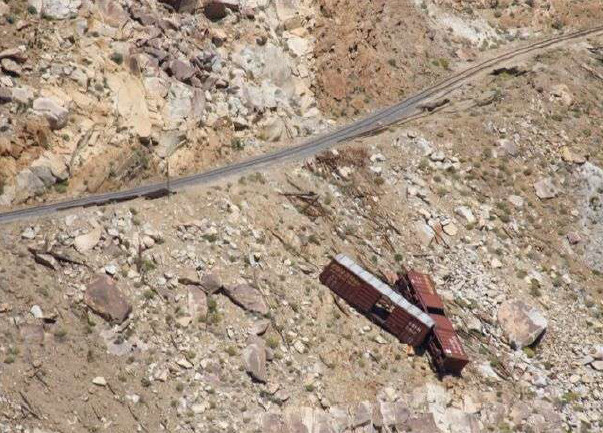
A glorious example of man’s ingenuity and persistence can be found by following the tracks of the San Diego and Arizona Eastern Railroad as it winds its way high above Carrizo Gorge. John Spreckels, of Spreckels sugar fame, was a San Diego resident who was concerned about San Diego’s development. What he felt was needed was a rail line to connect San Diego to markets in the east without having to route through Los Angeles first. Continue reading

Elevator Trim Position Indicator

Source: 2011 Q3 Beartracks, Dave Bice11q3bice3
I thought you might also be interested in a simple design for a trim indicator for the Bearhawk for builders who use the trim mechanism that Bob designed. As you can see in the photos I made a “indicator pin” out of a piece of welding rod with threads on the end although any small diameter rod would work. One nut is threaded on, the pin put through the trim chain, and a second nut added to lock the “indicator pin” in place. I cut a slot in the
inspection plate that the “indicator pin” extends through and moves in as the trim is changed. I had the position markers engraved into a piece of polished aluminum and then used black paint in the engraving to make the marks easy to see. I then riveted the trim position onto the inspection plate in the right position. This makes it easy to set the trim for takeoff without having to open a window and look at the position of the trim tab.
David

Charles Thiemann First Flight

First Flight of N623MW
My first flight in a Bearhawk was at Oshkosh ’07 compliments of Mark Goldberg and Avipro. I was close to finishing my first homebuilt, a single seat all wooden Champ replica, and was looking for something take our family along in. The Bearhawk looked like just the ticket, so spousal approval was granted, plans (1009) and Eric’s manuals were ordered and late in 2007 a skid of aluminum showed up at the shop door.11q3charles4
I started the wings first and by late in 2008 the wings had essentially taken form and were hanging on the ceiling of the shop to make way for the fuselage to get started. I had several helpers in the process, in addition to my wife, my daughter Miranda and father-in-law Galen were my rivet buddies. It remains unconfirmed, but after tractor and airplane, cleco was Miranda’s third word.
I picked up a large bundle of tubing from Dillsburg Areo in early 2009 and immediately the fuselage started to take shape. I was amazed how quickly it started to look like an airplane, however this quickly turned to the adage of 90% done, 90% left to go. 11q3charles2
Progress slowed quickly as a second child came along, William. Work on the project was touch and go for the remainder of 2009, but I was able to pick up a mid-time O540-B4B5 from a storm damaged PA28 and a Hartzell C/S prop from a Maule M7 which was getting refitted prior it heading to Talkeetna, AK. It would be another year until wing met fuselage.
This spring we determined that this project was to be finished this year and we set a goal of October for the first flight. Nearly on schedule, N623MW took flight on October 23, 2011. N623MW is a tribute to our family, my wife Jill and I were married on 6/23/01 and our children are Miranda and William. The first flight had all of the anticipation you would expect, but the hour long journey had no real excitement. Cylinder baffling needs a little review, but otherwise the takeoff, flight and landing were better than expected. Especially the landing, my onlookers were amazed that I greased it on right at the end of the runway as was stopped by the time I got to the second marker, I had to add some power and taxi up to the midpoint were the family and a few friends were waiting. The aircraft showed no bad traits and I am now up to the fourth flight, and each one has me more amazed with this aircraft.11q3charles3
A few details on N623MW: Lycoming O540B4B5 – Hartzell Compact Hub F84/68- 3R – ACK E-04 ELT – Dynon Skyview 10” with full engine monitoring & integrated transponder– 6.00X6 tires and Iron Design 8” tailwheel – Electronic flap system of my own design – Ray Allen trim servo for elevator trim – Interior is painted fabric and aluminum floor boards – Aveo Flash wingtip lights – Waiting on Dynon radio so I have my portable installed for now. This was almost a full scratch built, but I have to admit that I did purchase some parts form Avipro, including the steel fitting for the wings, fuel tanks, seat frames and tail feathers. N623MW came in at 1420lbs empty weight, with oil.
The aircraft is tail light, I had the option of either adding ballast in the tail or keeping 100lbs in the baggage area when flying solo, I opted to put 2 bags of feed back there for now. Our plan, after flight testing, is to take some short trips around the eastern US and I hated to add permanent weight that was not going to be needed when the kids were in the back.
That’s it for now, but stay tuned…
Charles Thiemann
11q3charles1

Rocket Airscoop

Source: 2011 Q3 Beartracks, Georg Himmeroeder
What do you think about my F1 Rocket airscoop solution? This way I have the choice between filtered air on the ground ( out of the cowling) and RAM air during the flight. Aerflow Performance offered that alternate air duct with an K&N filter and since I had this prop extension it was no problem to use that.
11q3georg4

11q3georg3

11q3georg2

11q3georg1

2011 Barrows Fly-in Report

Source: 2011 Q3 Beartracks, Jared Yates11q3yates1
This fall we drove to Bob’s airport for his 2011 Fly-in. It was great to see many new and old friends, and in my case, to see two Bearhawks that I hadn’t seen yet. The skies were clear and the temperature was comfortable, but strong winds kept the flying to a minimum. Roy Glenn arrived early in his cream-colored scratch-built Bearhawk. It has a Continental O-470 engine, and left-side cargo door. When I saw that the door was on the left, I said to Roy “Well, that sure makes a lot of sense!” He smiled proudly as though he’d heard that a few times already. Roy keeps his airplane in central Tennessee, and had fantastic tailwinds on the way to Bob’s.
The red and white Bearhawk belongs to Philip Johnson. It has a Lycoming O-360 and features a split rear seat. He can quickly change the configuration between a 2, 3, or 4 seat cabin. Philip is an experienced mechanic and the quality of his scratch-built airplane reflects his expertise. He added aluminum skin to the flaps and ailerons,
though in retrospect he does not advise others to do the same since the weight increase is significant. Philip keeps the airplane in Missouri, but he arrived at Bob’s from Pennsylvania on his way home from another trip. The tailwinds that Roy enjoyed were headwinds for Philip!11q3yates2
We also enjoyed seeing Bob’s Bearhawk LSA in near airworthy condition. This is a 2-place airplane that Bob built with the goal of producing a light-weight, LSA-eligible airplane. The empty weight is a remarkable 728 pounds, which Bob is quick to qualify “could be 20 pounds less with a wood prop instead of a metal prop.” He has built several airplanes, and this one seems to represent all of the weight-saving strategies he has been able to collect. The airplane is ready to fly mechanically, but it still needs an inspection. Bob has run into frustrating delays from the local FSDO inspectors, who say that they are understaffed and unable to schedule an inspection. The Bearhawk LSA has what is essentially a 75HP Continental engine, no flaps, thinner wing skins, and several other
modifications to reduce weight.
Overall the trip was a great success for us. I always enjoy being around other Bearhawk builders, and this time was no exception. We’re already looking forward to next year, when hopefully we’ll be able to bring our own Bearhawk!

Bikini-land to Mukluk-land in Eight Days

In a Drafty Bushplane, In December! With my Wife as Copilot
Source: 2011 Q1 Beartracks, Lee Taylor
About two years ago, I started flying with Eric Newton of Gulfport, Mississippi in his newly-finished Bearhawk, the Mis’sippi Mud Bug,which he had built in his workshop. This beautiful 4-seat plane is designed to be at home in the outback bush area of Alaska, and similar destinations far from any airport. Eric and I spent quite a bit of time in it investigating the overall handling characteristics of the bird, and I was quite impressed with its capabilities. Especially in the areas of slow speed flight, which is where it is most important for a bush plane to excel. Eric and I set up a test program to feel out its spin characteristics, (it just about WOULDN’T!), and we were highly impressed with just how capable this little bird was for the types of outback flying that it was designed to excel in doing. However, Eric decided that it was too good a bird to waste its time at the large and roomy airports here at sea level in Mississippi. He had developed a desire to build the follow up to the Bearhawk, the Bearhawk Patrol, and so he put the Bearhawk up for sale. He was strongly inclined to sell it only to someone who would use it where it was designed to go, that is in the back country far from airports. 11q1taylor
I honestly think that Eric didn’t really want to sell it, because I know that he turned down at least a couple of buyers that would only fly it as Eric and I had, that is from airports here in the”Lower 48″. He wanted it to live up to its design use.
Then Devon Lillico called, and Eric was in trouble. You see, Devon is basically a somewhat new pilot, but more importantly, he lives far up in the northeast of Alberta, Canada, at Cold Lake. Almost spittin’ distance from the Arctic Circle. He has a farm up there, and a private strip for his airplanes.
To make a longer story a little shorter, Devon made the trip all the way down to south Mississippi to see the plane, and spent a week with Eric flying the Bearhawk around the local area. They spent quite a bit of time over the Barrier Islands offshore here, which is as wild an area as we have. By the end of the week, Devon was in love, and Eric saw that he would be exactly the type of pilot who would use the Bearhawk for the purpose that it was intended. The decision was made to sell it to Devon. However, there was one small problem.
The plane was in south Mississippi, at the Shadetree Airport just north of Gulfport, and it had to get all the way diagonally across the entire US, then another 300 miles north to Cold Lake, Alberta, Canada. And Devon, as a Canadian, is not allowed to fly a U.S.-registered plane across the border into Canada. And Eric, as much as he was panting at the bit at such a flight, just couldn’t get any time off from his job to do the deed.
So, I got this phone call asking if I would be interested in a trip in a somewhat drafty bush plane all the way diagonally across the United States to northern Canada in the middle of winter? All expenses paid? Need you ask what my answer was? YEAH! Then my wife informed me that She Was Going TOO! This could get interesting.
JANE: I have been an active part of this flying family for SEVEN YEARS and most of my aviation knowledge has been “ON THE JOB” training of “honey hold this” in a cold hangar and “here she’s yours”for a while. We also talk aviation a lot. So, needless to say I had a pretty good idea of the adventure that was about to become reality. Lee wasn’t about to be allowed to leave me behind!11q1taylor2
LEE: I have family or friends just about everywhere along our projected route, and the timing was just right so that I could spend Thanksgiving with my two sisters and their families in Oklahoma. Then I have a favorite uncle in Canon City, Colorado whom we would love to visit for a couple of days. From Canon City is just a short hop to my old stomping grounds in Leadville, which would give us an opportunity to land the Bearhawk at the highest airport on the North American continent. Leadville is “slightly high” at 9,927′ field elevation, and there we could collect Eric’s Leadville Landing Certificate. At least his airplane made it there, and the picture of it next to the Leadville billboard was a must. A visit with old friends at my previous home at Parkland Estates,just north of Denver, then it would be a nice little side trip to visit Jim Irving for a little skiing break in Couer d’Alene, Idaho. Jim is a retired United 747 captain, and we share a love of flying and skiing. From there it is an easy 400 miles on up directly north to the northeastern edge of Alberta. Spitting distance to the Arctic Circle. In December.
No Sweat! Looks like an enjoyable trip. And Devon is paying all the bills. So, on a beautiful fall-weather day in Mississippi, I met Eric at Shadetree, and prepared to see just how he was going to handle seeing his baby disappear in the distance. I wasn’t real sure just how this was going to go, but I was fully prepared for some unmanly tears. I mean, Eric and I have flown this bird quite a bit, and I knew just exactly how much he loved the Mis’sippi Mud-Bug his handiwork had produced. The idea that he already had his next project sitting in the hangar ready for him to get to work on didn’t diminish his attachment for the Bearhawk, and I knew that.
I took quite a while getting the airplane thoroughly preflighted, and Eric and I talked at length on some details of the instrumentation that I wasn’t all that familiar with. Finally it was time, so I climbed in, shook Eric’s hand and promised to take loving care of his bird. Then it was fire it up, do a good thorough warmup and runup, and take off. I circled back for a low pass, and slowly waved the wings goodbye to Eric. As I climbed up into the broken cumulus clouds so that Eric’s last view of his bird was it climbing into the clouds, I’m pretty sure the tears were there, as his baby headed for its grown-up home. Kinda like watching a child head off to college, I imagined.11q1taylor3
ERIC: Here is a video that I took of the occasion: http://www.youtube.com/watch?v=I_VYMiOb6iE This was the first time that ever saw it fly while I was on the ground. Yes, I had some
tears in my eyes so I lost the airplane in the camera’s viewfinder a couple of times..
LEE:The first leg was a short one, just over to my home field at Diamondhead, Mississippi. There Jane and I were to pack everything in, including both sets of our skis, and prepare for an early-morning departure the next day. We had arranged for our neighbors Bob and Rhonda Vaughn to take care of our children, Missy and Cindy, our two Golden Retrievers. More on that shortly. The next morning, the Wednesday before Thanksgiving, Jane and I climbed in the Bearhawk for the four-hour leg to Tahlequah, Oklahoma, my “big sister’s” home. We actually got off somewhat late, resulting in what was to be “normal” for the trip, a night landing. Takeoff temperature next to the Gulf of Mexico was 76 degrees.
Landing four hours later in Oklahoma was right at freezing! With winds at about 18 knots. Didn’t take us long to find out that the heater in the Bearhawk was really adequate for balmy Gulf weather. And it did a pretty good job on the trip of keeping Jane’s feet from freezing. Other than that, Eric had done a good job of weatherstripping all of the doors and windows, but there was still a fair amount of “draftiness”. Warm clothing was going to be downright handy. And we had our ski clothes, if things got coolish. In December. Close to the Arctic Circle. Just might happen, hey?
JANE: The last important item I put within easy reach while loading the plane was a huge fur coat (not the real animal) having no idea that I would be wrapped in it before Tahlequah. By the way, our first leg landing was after dark, runway lights on at 5 clicks. No Sweat- easy sneezy. I had spent time here before in their cold hangar, at midnight, in the middle of a freezing December thunderstorm on my honeymoon in this same fur coat doing the “honey hold this” routine while we changed the thoroughly cracked #1 cylinder on the Cessna 180. We made it home just in time for Christmas that year.
LEE: We had a wonderful meal with Louise, my sister, and her huge family. After 8 kids, and uncounted grandchildren and great-grandchildren, Louise has one of the most wonderful families I have ever known. Any time we are there, it is as if we had only left yesterday. That night, however, there was a problem. I called Bob Vaughn to find out how our girls were doing, and he told me there might be a problem. A Big Problem. Seems Rhonda had fallen instantly in love with our two girls, and we might have trouble getting them back! She was threatening to adopt them in our absence.
We were pretty slow getting rolling that morning after the meal the night before, and it was mid-morning before we got to the Bearhawk. To be greeted by the sight of a huge amount of large ice gravel allover her! It had been out in a slight freezing rain the night before, and the raindrops turned to instant ice as soon as they impacted the wing. It was about 3/4″ high, and as rough as a gravel road. Obviously, we weren’t going flying any time soon!
I moved the plane over to where it would be protected from the freezing wind, and turned it so that it was as exposed as possible to the sun. Being Thanksgiving Day, of course, there wasn’t even the possibility of anybody being around so that I could move it into a warming hangar somewhere.
JANE: As a student pilot this was a good learning experience. We read about this stuff, but… when you see the ice it’s pretty obvious what it can do the air flow. We’re delayed but on the bright side, I had knowledge gained in real time. Get in the air “itis” could get us in trouble!
LEE: After about two hours, the sun had softened the ice enough so that, with a broom I had found, I could sweep most of the ice off of the surfaces. By working somewhat diligently, I finally got all the ice off, and we were ready for takeoff. By this time, it was about 2pm, but it was only a 50-mile flight, and fuel would be waiting at Skiatook, our destination. Carefully draining the tanks, after sloshing the fuel around by rocking the wings, I found there was some condensation in the 3/4 empty tanks, but it drained out cleanly. This is always a concern under these conditions, because freezing water in the tanks could mean plugged fuel lines. Just plain water in the fuel is bad enough, but…
Anyway, 30 minutes later we were landing at Skiatook, just at the edge of the Tulsa control area. Again no one on the field but my sister Retha and nephew Terry to greet us, AND the finding out that the fuel service was out of commission! Hadn’t been any notams about it——-Oh, well, who can worry about fuel when another family Thanksgiving Dinner awaited? Got the plane tied down securely and headed to the PigFest. And I did “fest”. There ain’t nuthin like Oklahoma cooking!
The next morning got off on the same footing as the previous departure, except no ice this time. We were “really anxious” to move fast after the huge meal the night before. (It looked like the Bearhawk’s huge payload might be needed).
This trip was going to be quite a long one, though, all the way from Skiatook, Oklahoma,to Canon City, Colorado. Right at the edge of the Rocky Mountains. Oh, and the wind was right on our nose, at about 20 kts.
A stop at a little field with self-service gas just about 25 miles away topped off the tanks, and I elected to make a taxiway takeoff, since the now-25kt wind was directly across the runway. I think the Bearhawk had to have rolled at least 50 feet before it was airborne—-and its 56 gallons of fuel should get us almost all the way to Canon City. Air temperature was a balmy 36 degrees. Wind was blowing pretty hard, but it was dead smooth. One of the benefits of the cold temps. That was the case almost the whole trip, even tho we did have upper winds at one time on the trip of just about sixty knots! Five hours later a night landing in the 25-knot winds netted us full tanks again from the self-serve fuel pumps at La Junta, Colorado. I have to tell ya, self-fueling a plane at 7 0’clock at night, with 25-kt winds, and air temp somewhere around 25 degrees, is just a little finger-numbing! A short trip on into Canon City, and we were able to defrost everything in my Uncle Ernie’s warm home. It’s friendly warmth was quite welcome. And once again, there were several family members there to give us the usual Ross family warm welcome. I do have a wonderful family, even if we are spread across the entire midwest, and see each other only every two or three years. Never anything but wonderful camaraderie, great food, and sad at parting again.
We had planned on leaving Canon City fairly late the next day, just aquick trip up to Leadville for a photo stop at this highest airport in North America. Next was to have been another 45 minutes to my old homestead at Parkland Estates, an airpark just north of Denver. However, when I finally got around to checking weather, it was obvious that there was a front over eastern Utah moving our direction, and if we made the stop at Parkland Estates to visit our old friends there, we probably wouldn’t get out for two-three days. Therefore, we bypassed the stop at Parkland, made our photo stop at Leadville, then after checking weather again decided to get as far north as we could by dark. Hopefully far enough north to get up on the northern edge of the front moving rapidly toward us. Salt Lake was already forecast to be closed by the time we could have gotten there, and that meant that we were going to have to give up our skiing trip with Jim Irving at Couer d’Alene. We were only going to have a one-day weather window to get to Couer d’Alene, and then I found out that the airport manager had decided to not plow the runway! Decision made, we would get as far north as we could, and give up the skiing with Jim. Dadburn it, I was really looking forward to seeing Jim again, and skiing after 7 years in Mississippi. 11q1taylor4
The takeoff from Leadville again shouted the capabilities of the wonderful 180-hp engine of the Bearhawk, and while the runway distance used was “a little more” than usual, (remember,this was at almost 10,000′ field elevation), climb out in the calm air was uneventful, and soon we had cleared the area of the Fourteener’s surrounding Leadville. Those are the multiple mountains surrounding Leadville that top out at over 14,000′. Wehad to climb temporarily to 13,000 just to get over the pass areas.
Not too long after that, we started to see the effects of the approaching cold front. The weather was severe clear, (and the Rockies with 200-mile visibility are SPECTACULAR from our vantage point), but we started seeing a “slight” modification of our ground speed. The Dynon TAS readout was telling us we were doing 118 mph TAS, but the GPS was showing 175 mph ground speed! And over the highest of the Rockies, it was dead smooth. Just a wonderful ride, if a cold one. This is something I had never seen in the Rockies, even though I had spent 12 years in the area. Virtually all of my mountain time here before had been in the summer. Winter flying up here is fairly rare. In the Rockies, in the summer, it is rare that we ever would fly past 2 pm. The reason was that in the early afternoon, the heat-driven winds almost invariably picked up, and flying in those conditions could literally tear a plane apart. The heat baking off the mountains, plus the wind-generated severe turbulence around the ridges have cost many planes the ultimate price. To have this incredibly smooth, HOWLING wind on our tail because of the very cold temps, —-it was a very happy trip.
We made it all the way to Casper, Wyoming, with that tremendous tailwind. We arrived over Casper at 5,000 agl, about 6:30, 15 minutes after dark, and found the control tower was still open. A radio request and they turned on the runway lights directly below us,with reports of “icy runway”, and winds “16 gusting 28”. Casper at night is a tremendous black hole, and it does have higher terrain in almost all quadrants, which was why I was so high on approach. I was concentrating pretty hard on the approach,and did what I thought was an O-K landing. The wind was pretty much down the runway, so I didn’t feel any real problem.11q1taylor5
JANE:
Been flying in those mountains before… Actually my first ride with Lee was to Leadville and I still said “I Do” 3
months later. By the way, this was one of those DARN good landings and I’m far from a “first timer” now. Better than OK on the landing, I would grade it a 9.5 and black hole seemed to make the runway lighting brighter. I could smell the hot coffee with pumpkin spice creamer !
LEE:
Taxied up in front of Atlantic Aviation, the FBO, and immediately there were three guys around the plane to help in the brutally cold, windy weather. They insisted on putting it immediately in one of their heated hangars for the night, and we gratefully went into the pilot’s lounge for a great and very welcome cup of hot coffee.
In about five minutes of conversation with the line boss, we found out that we shared a friend back in Mobile, Alabama. Keith Turner, the manager of the marina where we kept our sailboat for two years! All the way into the wilds of Wyoming, and find common friendships from Mobile, Alabama. It is a small world. They couldn’t do enough for us. Wonderful people in Casper.
Shoot, wonderful people everywhere on this whole trip! Everyone seemed to think making this kind of trip in the dead of winter in this kind of plane from the Gulf of Mexico almost to the Arctic Circle was something unusual. Especially since Jane was along. As soon as she climbed out of the plane, I was instantly forgotten by just about everyone. They only wanted to know from her how I had coerced her into this trip, and were amazed as soon as they found out she had insisted on coming. She had lots of airport admirers.
When they found out where we had come from, and where we were going, the standard response was a sudden silence for several seconds. Then a slow head shake as if they weren’t sure such a woman could exist. And very gratifying envy when they glanced in my direction.
They didn’t know Jane, though. We met 7 years ago, when, as a pilot living in the high desert of north Denver, a million miles from the nearest water, I got an email on my internet dating service “from a woman living on her YACHT in NEW ZEALAND.” She thought my dogs and planes on my profile picture looked “interesting”, and wanted to know if we had anything else in common. Turned out her yacht was a 40′ sailboat, and it was in New Zealand because Jane had sailed it there, with one crew member, from Ft. Lauderdale, Florida.
I’m a pilot, in Mile High DENVER, in the desert? A million miles from the nearest water? And I am going to have something in common with a lady who has sailed her sailboat halfway around the world? Who has lived on INDIGO full-time for 12 years?11q1taylor6
Six months later, she was standing in my Parkland Estates hangar, saying “I will”, to my Uncle Ernie’s question, “Will you, Jane, take Lee, —and Benji, Queenie, and Cessna,— for your lawfully wedded family?” After she stopped bawling for 2 minutes as the crowd broke out howling. Skydivers had delivered our wedding rings, (They had dropped out at 10,000′ from my Cessna 180, thru and with the full cooperation of the Denver Class B Airspace controllers), she and my sisters, her bridesmaids, had arrived for the ceremony in a Fairchild 24, and a beautiful
Thunderbird-painted T-33 made four low passes over the wedding crowd after the ceremony. Anyway, back to Casper. The anticipated cold front arrived during the night, as expected, so we got to take a welcome break and just veg out for a full day. We made a shopping trip to the local mall, and one of the things I bought was two pair of good thermal underwear. I knew the balmy 20-degree weather we had experienced so far wouldn’t continue. And it didn’t. With the cold front, temperatures dropped to right around 0 for the rest of the trip.
Jane’s big fur-lined coat wouldn’t be enough for those temperatures, and for the rest of the trip, I made her wear the thermal underwear. She protested strongly at first, but after she saw what the temps were going to be for our takeoff the next day, she changed her mind.
JANE:
Thermal underwear and I have never gotten along too well, and trying to get into this quite high door, and around the sticks with 4″ of heavy clothes impeding things wasn’t an attractive option. However,after about five minutes of flight when we restarted, with the several drafts cooling things off, I changed my mind about their necessity. The heavy coat tightly wrapped around it all with the hood up kept things reasonably comfortable, even if I did feel I was akin to an Eskimo.
LEE:
Sunday, Nov. 28th, was to be the day that we crossed the border into Canada. Weather, however, had a different plan, so we made it only as far as Billings, Montana that day.
Part II11q2taylor1
The land we flew over from Casper to Billings is some of the most fearsomely desolate anywhere in the world. Cut
up dramatically by glaciers, making huge deep sweeping grooves in the prairie with 100′ vertical walls lining the glacier valleys, and then the water runoff cutting deep, vertically-walled canyons in the glacier valley floors made for terrain that would be incredibly impassable in summer. With the heavy layer of snow, just plain forget getting out any way except helicopter. And a lot of the area is beyond even flight following radar or radio reception. I made dead sure that flight following knew every step of our route that we could talk to them, the radio was always tuned to 121.5 when out of contact with flight following just in case. And of course were contacted them immediately as soon as possible. The passage of the cold front had turned our wonderful tailwind of the recent past into one that was now just as strong, but dead on our nose. Which is where it would stay for the rest of this trip. We occasionally saw ground speeds on the GPS of 75 mph. This is incredibly wild, absolutely beautiful country, especially with our 200-mile visibility and butter smooth ride, as long as the engine kept running. Tried not to think about the options otherwise, out here. Even with a full emergency kit on board. That beautiful hunk of metal never even hinted of missing a beat. We spent another full day in Billings, and Tuesday morning it was obvious that we had to get going on the rest of the trip. We had our return flight scheduled for very early Thursday, the 2nd of December, and that was important. I had prepared for our border crossing by studying up on the eAPIS requirements by our wonderful Homeland Security Department, and thought I wouldn’t have a whole lot of trouble filling out the “fifteen minutes” of government INTERNET COMPUTER REQUIRED paperwork. FIVE HOURS LATER, I finally had every single “i” dotted, and “t” crossed properly, and had “computer permission” to proceed to Lethbridge, Alberta. I filed, and with strongly gritted teeth because of all the ridiculous idiotic US Border crossing stupidity, we took off. And, once we had filed, the US Government had not the slightest interest in us. No inspection by anyone to verify the information I had supplied, No airborne reporting required, no Flight Watch even available! No nothing. We could have flown across without anything, and they wouldn’t have known we existed. Only us legal people have any trouble crossing our borders. And the five-hour delay virtually guaranteed that we weren’t going to make Cold Lake that day, as had been the plan. Going into Canada, by comparison, has always been a pleasure,although it has been fifteen years since I had done so. I was looking forward to dealing with the Canadian officials. “Forgot” that we live in the age of 9/11 now.11q2taylor2
Before, whenever I went into Canada, I was REQUIRED to have a firearm, either a rifle or a shotgun, in the airplane. For possible survival needs. Back then, I had bought a break-down 12-ga. shotgun, just for that need. This time I of course had the gun in the plane, and I had made four calls to Canadian customs, including their head office, and each time told the individuals I was talking to that I did have my shotgun with me, as needed. “No problem, it’s just that now you will have to pay a $25 ‘license’ for it as soon as you land. ” Grrr–“O-K”.
However, someone forgot to tell these four higher customs officials that “Things Have Changed.” When I immediately told the customs officials at Lethbridge I had the shotgun on the plane, “as required”, I was met with the dreaded dead silence. “You can’t bring ANY kind of firearm into Canada on an airplane.””You’re gonna have to take it back to the States.” Yeah, I just spent five solid hours filling out incredibly stupid computer paperwork to get OUT of the States, and now I am going to go BACK IN without notice? I don’t think so. Long story a little bit shorter, after several phone calls by them to their superiors, and the superior’s superiors, it was finally decided that I had been very upfront about having the shotgun, and that I had been misinformed by their own people. So, after filling out three solid pages of Immigration Paperwork, I am now an official Canadian Immigrant! And can take the gun in, “BUT DO NOT LET IT OUT OF THE PLANE!! “Or you WILL be arrested!”11q2taylor3
JANE: Hmm… seems the Pacific Islands are a bit easier to deal with- and New Zealand, even throwing out everything except canned food and inspecting the bottoms of your hiking shoes for foreign dirt! And one hell of a lot warmer.
LEE: Lethbridge was an interesting airport, too. Just about 0 on the thermometer, 25-knot wind blowing, and solid ice on the ramp. I had hurriedly dug out my own chocks on pulling onto the customs ramp. No chocks or tie
downs available on the icy customs ramp. I immediately had the fuel truck driver bring his truck back out after he’d fueled it, and park it in front of the plane to serve as a windbreak. All the time I was working with the customs officials, I was nervously looking at the plane, wanting it off that windy sheet of ice. Finally the customs officials were satisfied, and I was given permission to move the plane. However, weather up north was not promising, and daylight time was getting short, so with everything else, Lethbridge was to be another overnight stop.11q2taylor3
I had talked to the FBO earlier, and had been told there was no hangar space available. Everyone in the
area had congregated there because of the weather, and I would have to tie down outside their hangar.
As usual, though, the local people came through. When they found out what kind of plane was involved, and our story, (Jane telling the story to them didn’t hurt one bit) they went out and rearranged the whole hangar to make space for us. We were inside, out of the wind and off the ice finally, and I breathed a big sigh of relief. We were pretty tired, anyway. And guess what? We had made a final day’s stop in daylight! Plus this way tomorrow should be a pretty short flight, just another 300 miles north. And the Bearhawk would be Home. The next morning dawned severe clear, very cold, and with our perpetual strong wind right on our nose for the flight. There was another cold front hanging fire off the western horizon, (we could see the wall off in the far distance), but it should stay there long enough for us to get into Cold Lake.
The first thing though was just to get to the runway! Remember all that nice icy pavement? Now I was going to have to taxi crosswind to get to the runway, and that was going to be interesting. We pulled the plane out in front of the hangar, protected from the wind, where Jane and I loaded up. Got fired up with no problems,
thanks to the warm engine from the heated hangar, and then taxied to the hangar side apron facing into the wind to allow the engine to warm up gradually. However, warmed up now, facing into the wind, on the icy ramp, I had to make a 180 back toward the taxiway. Nope, get about 30 degrees off the wind, and guess what? Ice-skating sideways toward the hangar, unable to turn any further off the wind. “Well, gotta figger this one out, don’t we?” Turn back 30 degrees off the wind the opposite direction, and ice-skate to the opposite side of the ramp. Stop, turn back the other way, build some momentum in the 30-degree side skid towards the hangar, then powerfully kick the rudder the opposite way, while gunning the engine. VIOLA!, a nice whip-around, and we are heading the right direction. Downwind. “Hey, this is kinda fun!” Except there ain’t no way we are gonna stop if needed. There is just a little drifted snow at the upwind edge of the taxiway turn, so I decided to taxi through it rather than risk get downwind on the taxiway. Wrong. That drifted snow has frozen, and six feet into the four-inch deep snow, I no longer have a worry about slipping on the ice. Because I can’t move AT ALL! Even at full power.11q2taylor4
JANE:I have enjoyed ice-skating virtually all my life, even took lessons from a Russian Olympic champion while I was in New Zealand. But if anyone would have told me that someday I would be in an airplane, ice skating sideways
across an airport apron one second, and then stuck solidly in 4″ of snow the next second.
LEE:The guys from the hangar had been watching all this, probably laughing their heads off at this tropical pilot trying to deal with their daily conditions, and they came out en masse to help push me back out of the snow. No big deal, just zero degrees, wind blowing 25, icy snow they are trying to push me back out of which
means they have great traction for their efforts- all I can say is that every single airport I landed at, when I was dealing with the aviation people, they were just plain magnificent.
Out of the snow, waved Thanks! and good-bye, ice-skating to the runway and a reasonably uneventful takeoff, and we are on our way to a comfortable early afternoon arrival at Cold Lake. Even though the thermometer says 4 below zero, our GPS-reported ground speed is still only 90, while our TAS is saying 139.
The eastern half of Alberta, Canada, is primarily an extension of our own Great Plains. There just isn’t very much out there, except flat farmland. And now, of course, in December, it is all covered with a uniform white blanket. Visibility was fantastic, and the ride was smooth, if slow because of the headwind. No problems, we are going to get to Cold Lake with plenty of daylight to spare. Only 300 miles to go. Wonderful conditions.
Nice easy ride today. Until we got 20 miles from Cold Lake. Then the curtain dropped. Thud. Cold Lake Tower reporting 1 1/2 mile, 300 ft ceiling. Divert to another field 30 miles away, reporting 3 miles visibility. Yeah, sure. Canadian 3 miles. Slightly optimistic, I thought. Landed without incident, anyway, at Loydminster- to call Devon and tell him there was going to be another slight delay in his getting his new airplane home. I think he was about to give up. We were supposed to be there two days ago. Excuse of course was the winter weather.
After about an hour at Loydminster, Renee, Devon’s wife, called and reported “blue sky” overhead, so we piled back in and headed north again. There might have been some blue sky at some point, but it didn’t take very long before I was remembering how it had been to fly in Alaska, and kinda funny, it suddenly felt just plain natural to be in this country, in this plane, down at 150′ over the trees, with maybe 2 miles visibility. Devon had given me pretty specific descriptions of how to find his place, none of which turned out to be recognizable in the low viz and uniform snow covering. However, Renee had given us an exact lat-long position, and Devon had said he had a large green metal workshop. We finally gave up trying to find the “strip” by directions, (we had flown by it twice, Devon later told us), and set up a GPS lat-long intercept. When the GPS said we were at the lat-long, viola, there was the green shop. the GPS lat-long wasn’t off by a hundred feet. That was when we found out that Devon’s Private Strip was a place he had driven his truck up and down the rolling wheat field to pack the snow down. Somewhat. And packed snow isn’t a whole lot different in scenery than the regular stuff, even though he had marked it with some orange traffic cones. No big deal, just be sure to touch down no later than on the upslope of the second roll, because if you pass over it, the downslope on the opposite side will fall away just at the same rate you are descending, and there are TREES at the other end. BIG trees! My kinda strip. Jane hadn’t ever landed on anything but an airport before, though.
JANE: Hummm.O.K, we’re gonna land on a little, short roller coaster. I’ll do my Sister’s Jesus Joseph and
Mary… works for her. Geez, that wasn’t so bad after all. O. K Husband, I am now close to “Hell, I’ve seen it all!“
LEE:We followed Devon on his snowmobile to the little shed at the far end of the strip, just before the trees. I pulled the Bearhawk up in front of the shed, and shut down. The Mis’sippi MudBug was finally Home. Where it was meant to be.
JANE: Devon and his dad were happy men. Just the kind that deserve a ‘BIG HUG” and by golly they got it! We were pretty happy to be there, too.
LEE: Our trip was a long way from over, though. It was now Wednesday night, the Mud-Bug looked so incredibly happy and contented sitting in front of its Cold Lake, Alberta shed, with the light snow dusting the top of its wing,
but we still had 286 km driving in the winter night to get to Edmonton for our return flight home early the next morning. Devon and Renee and the rest of their family treated Jane and I to a great steak dinner, then Jane and I piled into the car they were loaning us for the drive to Edmonton. At 1 am Thursday morning, we finally piled into bed at the motel in Edmonton, to get up at 4:30 am for our 6:45 am departure. And another trip through Customs. No major problems this time. The shotgun is still in the plane- remember Canadian Customs warning me about taking it out of the plane? I am in full compliance!
However, problems not over. We had an excellent, smooth on-time flight right to within one minute of scheduled arrival back in Gulfport. Except that our skis, which we had hauled all the way from the Gulf of Mexico almost to the Arctic Circle without their ever seeing snow, didn’t show up back at Gulfport when the rest of our bags came off the conveyor belt. Took two more days, and four attempts by the delivery guys, to get the trip finally over with. They were finally delivered on Dec. 3rd, Jane’s 68th birthday. What a way to celebrate a birthday, with this trip finally completed. It was an interesting eight days. Jane and I surely did enjoy it, and sitting in the warm comfort of our south Mississippi home, the memories bring a real satisfied feeling in the stomach.
JANE: I’ll have to say, on a trip like this, one ultimately pulls out all the“STOPS”. If I had not been thoroughly “SEASONED” by my previous 7 years in living with aviation, I would have called for a rental car at the first fuel stop. My husband, I’ll fly with him ANYWHERE.