Source: 2024 Q4 Beartracks, Greg Charest
After investing a lot of time and money, your shiny new Bearhawk is complete and has a special airworthiness certificate. You have taken transition training, made decisions about insurance and your first flight was a success. Fantastic! You are officially in Phase 1 Testing. But what now?
As you probably know, the FAA allows two different approaches to Phase 1 testing:
1) You can operate the aircraft within a designated area for some number of hours (usually 25 or 40) with some number of takeoffs and landings (generally 10 or 20) to complete Phase 1. These limits are specified in the Operating Limitations that accompany your Airworthiness Certificate.
2) Alternatively, you can use the Task-Based Approach to testing outlined in Advisory Circular (AC) 90-89C. This program was developed in cooperation between the FAA and EAA. It outlines 21 different test areas and associated test cards that can be used to document the process and results.
There are compelling reasons to use the Task-Based approach, not the least of which is that you would likely do something similar even if you chose to simply fly the 40 hours. After all, you want to know best glide, Vx, Vy, stall speeds, effects of various flaps settings and so on. Why not take advantage of the structured approach and do it in a methodical manner? As a side benefit, it may be possible to complete Phase 1 in a shorter period as the requirement is to develop and carry out a plan, not meet an arbitrary time goal.
It’s important to keep in mind that the Task Based Approach is FAA guidance, not a set of regulatory requirements. It is intended to help you develop an individualized plan. The related EAA Flight Test Manual is a concrete example of a task-based plan. You can and should feel free to create a plan that meets your needs. While the EAA documents are quite good you may want to include other tools in your plan. For example, The Bootstrap Approach to Aircraft Performance by John T Lowry is an excellent alternative to help calculating V speeds and rates and angles of climb/decent. See Jared Yates’ article in KITPLANES magazine for a review and explanation.
While the task-based approach is superior, there are some practical difficulties in completing the tests. The most significant issue is that there is often a lot to do at the same time. Precise flying, monitoring engine data, watching for traffic and collecting the required performance data can be a lot to manage by yourself. This is especially true if, like the typical builder, you have spent a lot more time building than flying in the last couple of years and are a little rusty.
There are a couple of ways to make the testing process a little easier and to generate better test data. One is human-related and the other technological. The human solution is to use the Additional Pilot Program for Phase I Flight Test Program described in Advisory Circular 90-116. Note that this only applies to aircraft built from commercially produced kits. Operating limitations issued for Phase I operations restrict the number on board an aircraft to the minimum flight crew. In general, the minimum crew for a typical E-AB aircraft is one (you). AC 90-116 provides a mechanism that allows you to have a second pilot on board to assist in the testing process. It defines two categories of pilots approved to assist: Qualified Pilots (QP) and Observer Pilots (OP). Qualified pilots can participate immediately but the QP experience qualifications are quite high (see 90-116 for the specifics). Observer pilot qualifications are lower, but you must complete the first 8 hours of testing, including a specific set of tests and maneuvers, before you can use an observer pilot. If you want to have another pilot assist you, it makes sense to modify your test plan to meet these requirements early on.
The technological solution works if your airplane has an EFIS. Most if not all EFIS systems are able to write data to a log file. The Garmin G3X for example logs 81 data elements every second, some are direct measurements, and some are calculated values. These are written in a standard comma separated format. This relieves you from the need to write down key altitudes, airspeeds, times etc. and allows you to focus more on flying the maneuvers, watching for traffic and staying inside your designated testing zone.
There is an amazing amount of useful data in the log file, but it can be overwhelming. A typical test flight will result in a >3000 row spreadsheet. Finding and selecting the relevant records and values can be a challenge. It’s helpful to use the tools provided by whatever spreadsheet program you prefer to reduce the data set. Spending a little time to hide the columns you don’t need and freeze the field name rows is worth the time. More advanced techniques to average some of the measurements may also help to reduce short term variability in the recorded data.
Even after cleaning up the data it can still can be tedious to find the records that correspond to precise start/stop times in such a large data set. This is where the web application at https://www.flysto.net is especially useful. This tool can analyze the log file, separate the flight into parts, map your flight path and plot altitude, speed, pitch, bank etc. Placing your mouse pointer over a specific point on the flight track will display the related time field. This lets you pick a portion of the test flight graphically and directly match it to the corresponding rows in the data. You can see in the example below how straightforward it is to select the exact time elements for the climb/descent portions of the test I was flying. The flysto.net tool is free and has many other useful capabilities.
Flight testing is not easy and can be a little frustrating. Real world data rarely looks as nice as the textbook examples. Hopefully some of these tips can help you get better results and focus on the fun and educational aspects of the Phase 1 process.

Bearhawk 4-Place N776BE First Flight in Washington
Source: 2024 Q4 Beartracks, John Reddick
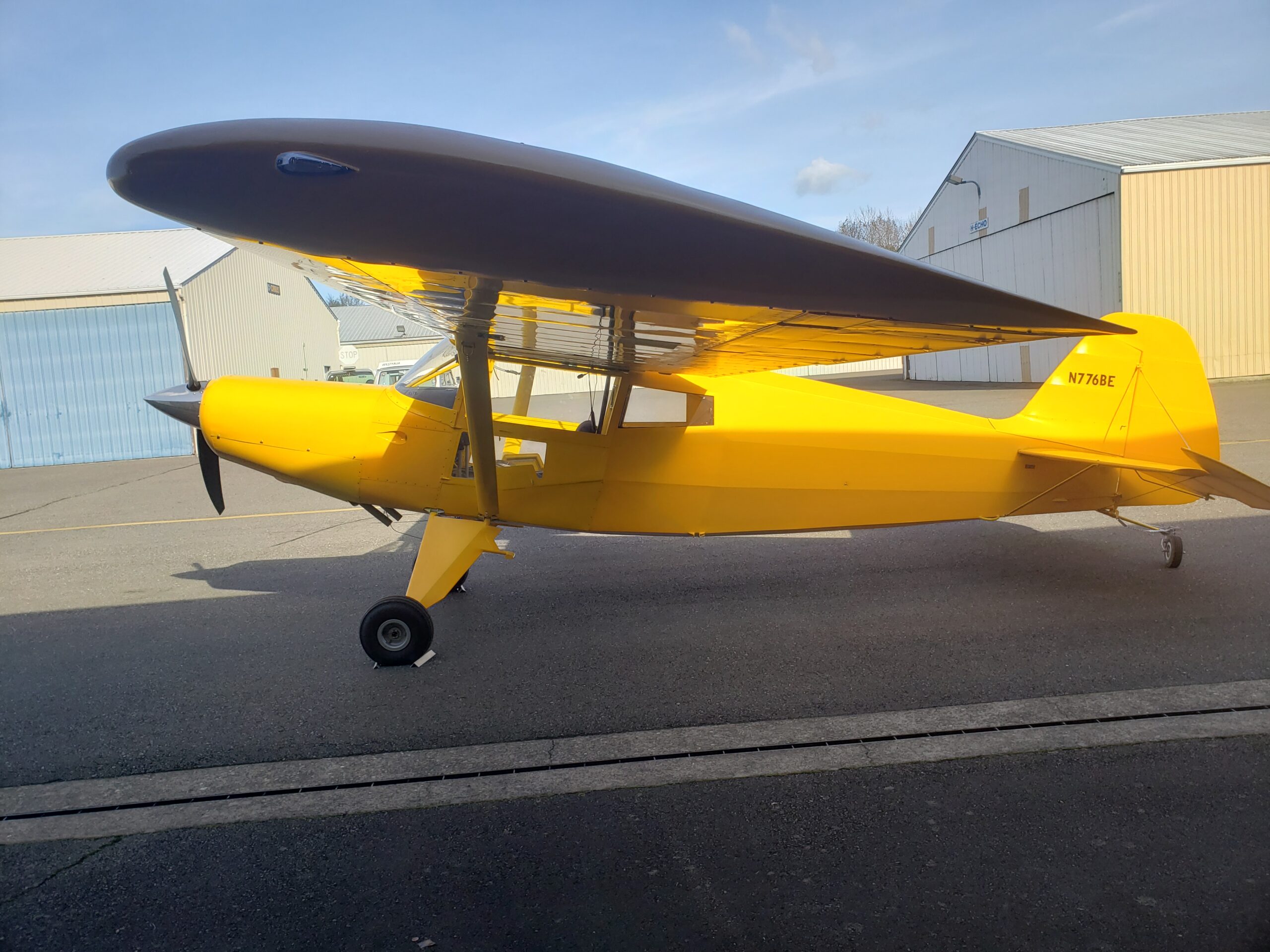
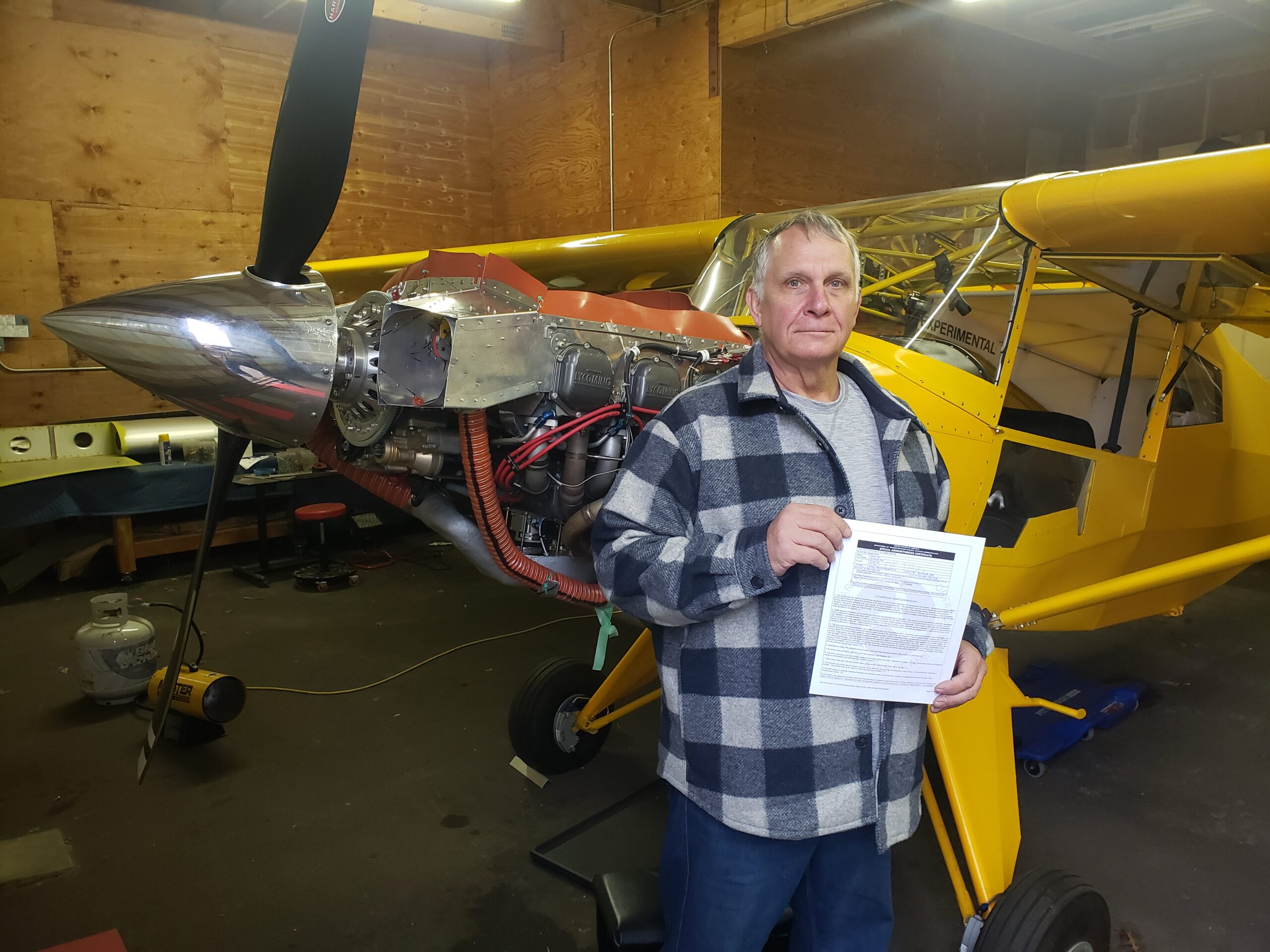
N776BE flew for the first time on Dec 6, 2024 after 6 1/2 years of on-and-off building. I actually only worked on it for 2 years and 4 months. I did numerous “off the ranch” things to the QB “B” model kit. All of that contributed to the extended build time. It was inspected by a DAR on October 30th, 2024.
I have about 5 hours flight time in 4 flights, most things working well. Sorting out a heavy left wing, and noise on the VHF com. The #6 cylinder gets hot pretty quick on climb out, despite it being 40-45 F outside. Other cylinders are fine in climb, and all are fine in cruise. Probably mislocated oil cooler flange (installer error). Other than that, going smoothly.
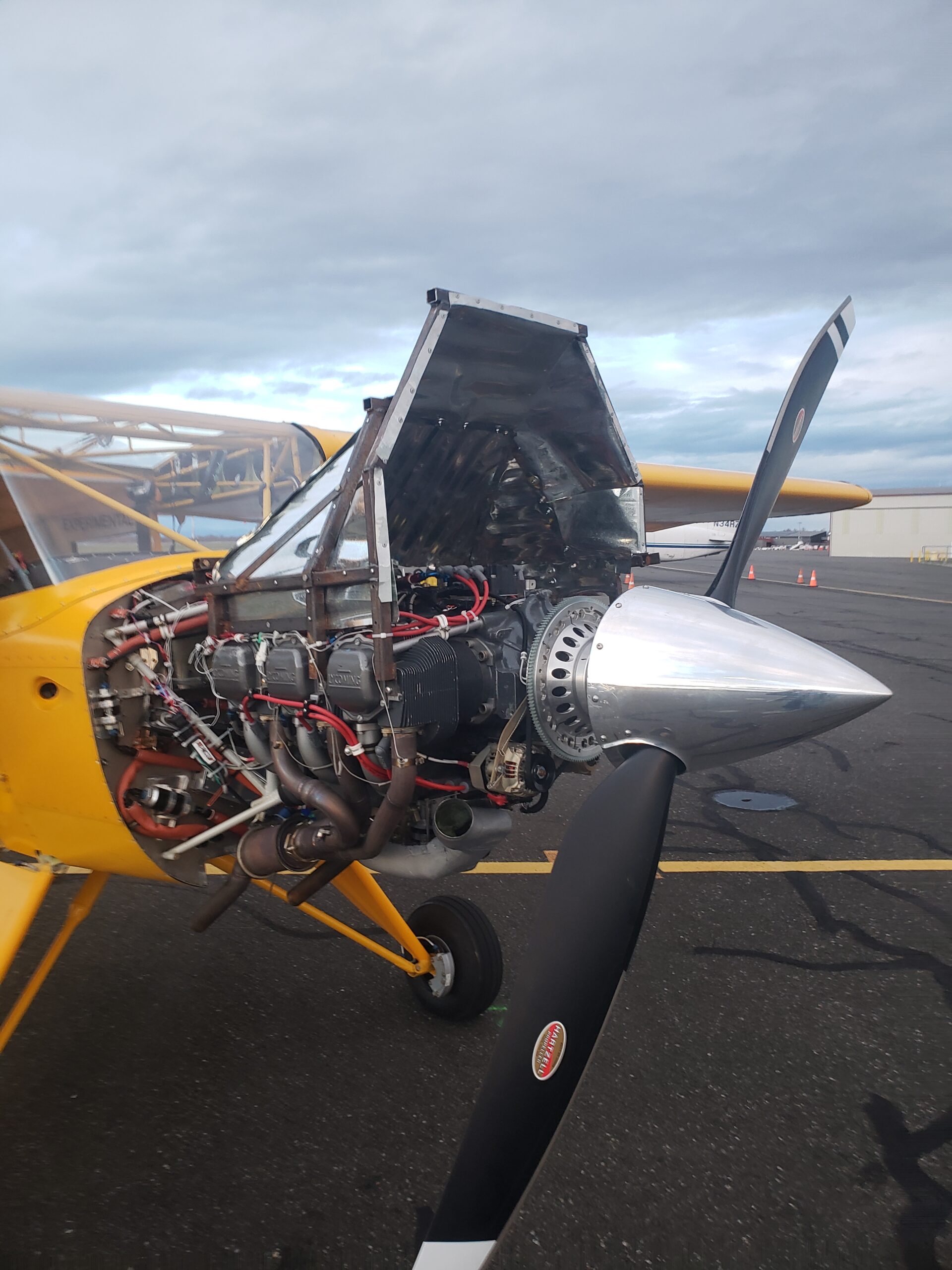
I think the two things that made the first flights much less stressful were 3.2 hours of transition training with Jared, and running the engine in on the ground for 2 hours (picture below). Both gave me a lot more confidence on the first flight.
My “off the ranch” mods were:
-Custom fold down instrument panel
-Composite tail fairing
-Electrical system
-SDS EFI/EI
-“Almost” 2 alternators
-“Almost” 2 batteries
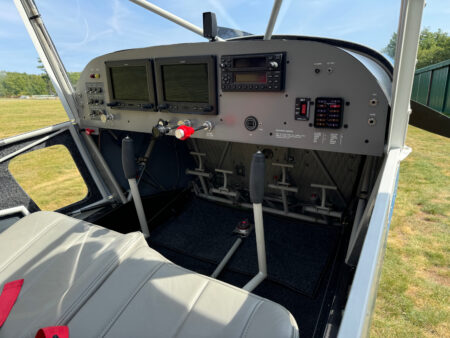
The panel is a simple, single EFIS with a tablet, single com, and remote transponder. The EFI/EI turned a simple plane into a bit of a high school science project, wiring-wise. But I am most comfortable with EFI, and have done a huge amount of 12V wiring, including a business I had for 3 years. This may not be the best choice for someone who hates wiring.
I also used Oratex (which caused the composite tail fairing). If it lasts a long time I love it but it was tedious and time consuming to install.
Empty weight was 1403, CG was 7.1 inches (67 lbs on the tail). IO-540, 2 blade Trailblazer, full skylight. That weight is on small tires, and no back seat. That makes it the mid 1400’s with bigger tires and a back seat. I need 50 pounds of ballast with only front seat occupants.
It is exactly what I wanted when I ordered the kit. Like a lot of homebuilders, I always wanted to build an airplane. I even bought a set of plans when I was 15 or 16. I ended up flying for a living, and moved around so much I was never able to build one, until now.
Thanks to everyone on the forum for all the contributions. I knew what I was getting into before I bought the kit. Thanks to Jared for moderating a great forum, and Mark and Bob for the customer support.
I will put up some posts on my “off the ranch” stuff if anyone is interested.
Bearhawk 4-Place N3XH First Flight in Colorado
Source: 2024 Q4 Beartracks, Rod Smith
After a very long time coming, December 17th, 2024, was the day my Bearhawk finally took to the air. As a very rusty tailwheel pilot with just 6 hours of tailwheel time in the past few weeks, I wondered how it was going to handle and how I would react to any problems that might pop up. Fortunately, the flight went very well. The EAA flight test card #1 says to make your first flight without flaps, I chose to takeoff with 2 notches and land with 3 notches. That’s how Virgil Irwin had me taking off and landing in his beautiful Bearhawk 5 during a 2 hour checkout.
The flight went very well, and I was in awe of the performance. I found my plane to be light on the elevators, a little heavier on the ailerons. As a bonus it flies level with hands off the sticks. The only issue I had was way too much angle on my rudder tab and I was having to use an awful lot of pressure on the left rudder pedal to stay coordinated. So much so that after about 20 minutes my left leg went numb and I thought I better land while I could still move my leg. My first landing wasn’t pretty, didn’t get fully stalled and bounced it. I now have made 3 flights for a total of 2.7 hours. It gets better every flight.
My plane is the original 4-seater with the modified 4412 airfoil. It is scratch built, except I did buy the quick build wing kit from Avipro in 2004 for $9900. I have a modified parallel valve 300HP IO-540 and a 3 blade 83” MT prop. My panel is Garmin G3X with 2 10” screens and set up for GPS IFR. Some modifications I made are carbon fiber gull wing doors and Hoerner wingtips. I moved the trim wheel to the floor, just left of the flap handle and have a console covering the flap and trim wheel mechanisms.
I think I may have the unfortunate record for the longest build time of a completed Bearhawk. Life does get in the way at times. My first build log entry was June 1, 1999, a quarter century ago. That first flight made it all worth it. God willing, I will see many of you at Oshkosh this coming July.


Bob’s Companion Project Update – Fall 2024
At press time the fuselage fabric is painted. A few pieces of front-end aluminum parts still need paint. The engine is finished, and is ready to be back on the airframe. Hopefully he’ll have an assembled airplane that looks like an airplane in time for the fly-in. The instrument panel, floorboards, and door sills are all in. He has taken a few antique car tours that have kept him away from the project but he’s still making steady progress.
There have been two completed Companions so far that we have weight and balance numbers for. In both cases, the empty CG was around 14-15 inches, as compared to a more typical 10-12 inches for a 4-Place. Bob says the CG on the companion is intentionally further aft, because it doesn’t need to be prepared to carry such a big load in the cabin. At a full-forward CG, the front seat occupants are aft of the CG, but approaching the aft limit, the front seat occupants become forward of the CG. Bob encountered this when carrying engines by himself. At the heaviest loads, the airplane can carry more if there is someone in the front seat than if the front seat is empty.
Bob says, if Companion builders want to carry a lot of cargo, use the constant speed prop and angle valve engine. For more reasonable/typical loads the parallel valve engine works very well. For both the 4-Place and the Companion, having the CG in the 14” range for day-to-day operations makes for an airplane that handles better, can land shorter, and feels lighter on the controls. It’s just with the 4-Place, we concede ideal solo-load handling by having the empty CG farther forward, to enable more cabin loading. Aircraft design is all about compromise!


Texas Flag Bearhawk Five Nears Completion in Pennsylvania
Source: 2024 Q3 Beartracks, Tim Weaver
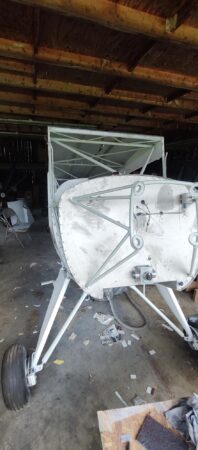
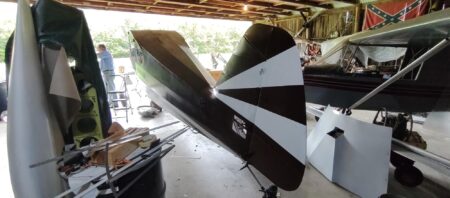
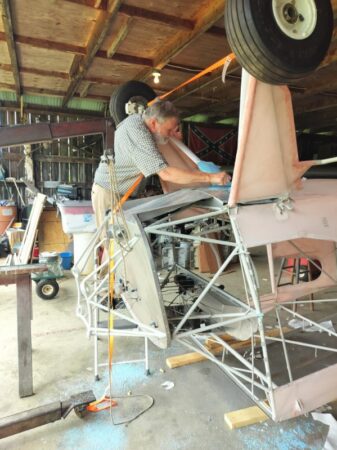
Having built a Bearhawk 4-Place and a Bearhawk LSA, my latest project is this Bearhawk Five. The engine, a Lycoming IO-540, was built by Mike Meador, coupled with a three blade composite Hartzell propeller.
The Dynon instrument panel with autopilot was completed by Advanced Flight Systems of Canby, Oregon.
The floor boards and other beginning processes were started. After I completed many interior details like window frames, heat ducts, and autopilot mounting plates, (time consuming for sure), I made and fit all fuselage access hole frames etc., fit cowl, door, and window skins. I began covering it with the Stewart System in the winter of 2023. While Lancaster Aero Refinishers painted it, I continued work on the wings, adding the control mechanism and wiring. In late spring and summer of 2024, I installed the engine and propeller and tested the instrument panel. The engine break in happened exactly two years from the start of the project, following the Lycoming break in procedures. I expect to have finished the plane around the time of this publication.
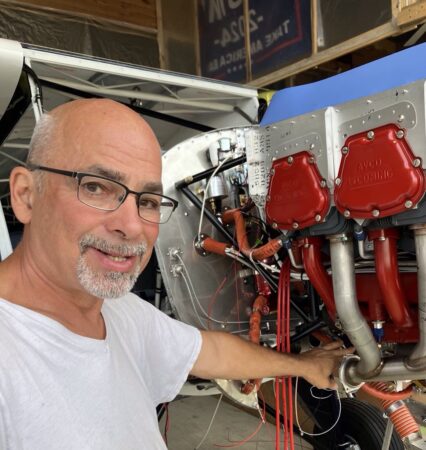

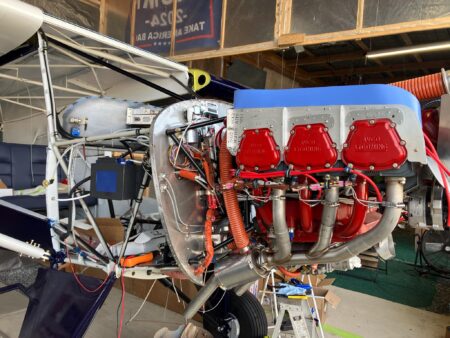


In the photo below, Sean Geist, who custom makes composite parts, is making windscreen trim piece.

Bearhawk Companion N404BH First Flight – Massachusetts
Source: 2024 Q3 Beartracks, Greg Charest
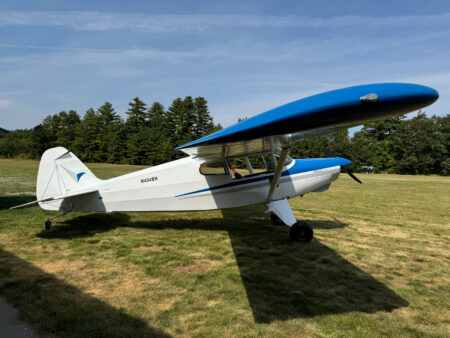
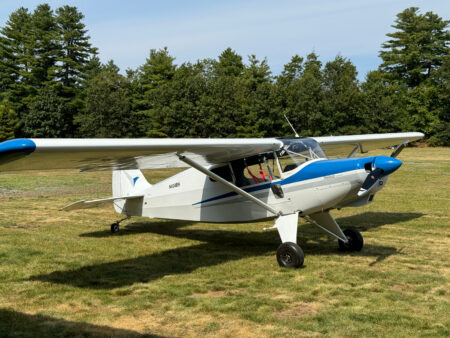
The project started in 2020. Since I had ordered one of, if not the first, Companion models and there were no flying examples, the original plan was to build it as quickly with the help of another experienced Bearhawk builder. Unfortunately, the COVID pandemic resulted in that being impossible and the build transitioned to a slower pace. Nevertheless, after 3 and ½ years and a couple thousand hours of work, N404BH received a special airworthiness certificate on 8/21/2024.
The goal was to build a fairly simple aircraft at a reasonable cost. To that end, the engine is a Lycoming angle valve O-360 overhauled by Bob Barrows with a fixed pitch Catto 78×56 propeller. Following the ‘keep it simple’ approach the magnetos are Bendix, the exhaust is from Vetterman and the electrical system uses an automotive style fuse panel. The covering is Stewart’s System and the avionics and engine monitoring system is a Garmin experimental G3X system with a GTR-200 radio, GTX-335 transponder and GDL50 ADSB-in receiver. The interior is a combination of fabric and Kydex plastic panels. One of the few luxuries is a set of leather seats built by Sport Aircraft Seats. I kept weight in mind but was not obsessive about it and with the somewhat heavier O-360 model the empty weight ended up at 1257 with a CG of 14.62.
I modified with a Vans Aircraft baffle kit and paid close attention to sealing up the cowl which has appears to have worked well. During ground testing and the first flight the cylinder head temperatures have not exceeded 350 degrees and the oil temp has been generally under 200.
The first flight was happily uneventful and other than a slightly heavy right wing, the airplane flies very nicely. The next step is to put on 2 or 3 hours at a high power setting for the initial engine break-in and then work through the EAA designed flight test program.
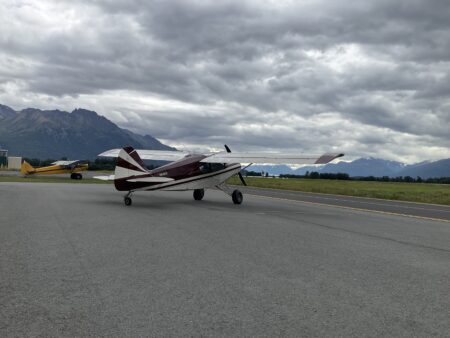
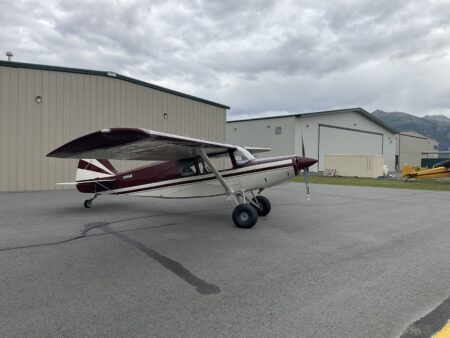
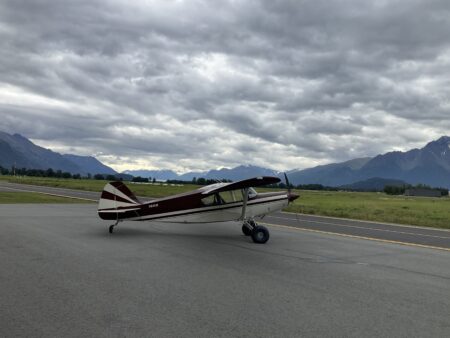
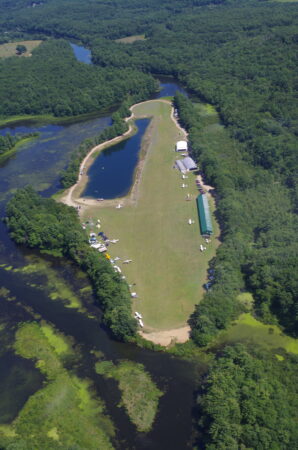
Greg’s plane is at Crow Island Airpark, 8MA4, in the photo below. It’s worth noting that he didn’t have electrical service during his build, so he did it all with a generator and a gas-powered air compressor!
Flight Testing Progress Report N907PM, plus Control Locks for the Flaps and Ailerons, Tail Lift
Source: 2024 Q3 Beartracks, Paul Minelga
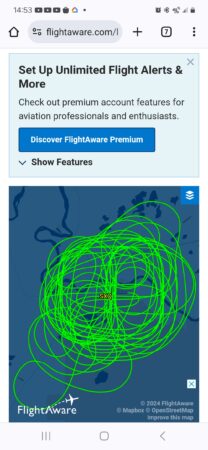
Here’s an update of N907PM’s flights, up to 28.2 hours on the Hobbs. Well, there isn’t much to update! This may be shocking to some, but completely logical to me, so let me walk through the hours from first flight to present.
I already went over my first flight in the previous Beartracks article and YouTube video, so no surprises there. So what happened next? Extensive testing of the flight envelope? Figuring out the handling characteristics of my Bearhawk? Multiple stalls, turns, simulated engine failure, full-flap landings? Nope. None of that…well, almost none, but I will explain why and you can critique as you wish.
The first flight was certainly an exhilarating experience. It was the first date with a new machine, flying at the upper range of its engine and airframe performance envelope. The excitement of not knowing which sounds were normal and which sounds could be the beginnings of a catastrophic event was to be experienced, as only one can on a first flight! Well, 1.3 hours later proved the airframe and engine were up to the task of at least one safe takeoff, flight and landing. But the question remained: What’s next? I have a considerable amount of time and money invested in the engine and I want to break it in as best as possible. The EAA test flight checklist doesn’t allow for this scenario. Since the aircraft didn’t offer up any surprises and it is a proven design, my focus on the subsequent hours were focused on engine operating parameters and a proper break-in. In other words, I ran the engine hard. Running hard meant no air work, no slow flight, no series of stop and go landings, no shock cooling, all in the name of engine break-in.
At 5 hours I did my first oil change, and it was necessary! The oil looked like metallic graphite paint! I cut apart the oil filter and thankfully it didn’t yield any unwelcome surprises. Along with the oil, the oil filter just showed minute evidence of a LOT of new moving parts in a powerful internal combustion engine getting to know one another. I even pulled the oil screen in the sump. Fortunately, there weren’t any pieces with part numbers trapped in its mesh. Oil was still being consumed, or blown overboard, but I still don’t know where this engine’s “happy spot” is on the dipstick…every engine has one. So more flying is in order….a lot of flying…within gliding distance of my home airport, until about 10 hours. After that, I did a flight with the last 30ish minutes using a modified EAA test flight checklist by doing stalls and exploring trim changes with different flap settings. I also did a full-power go-around at altitude with three notches of flaps to check if I could overcome the sudden initial trim change. I did.
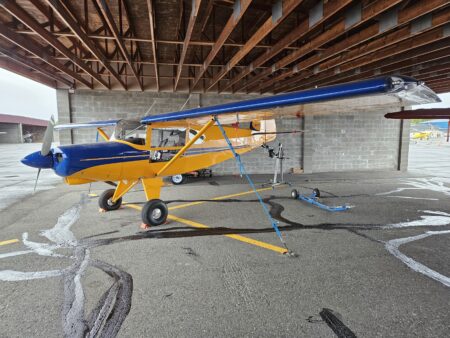
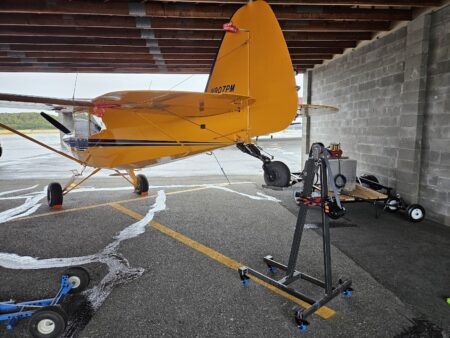
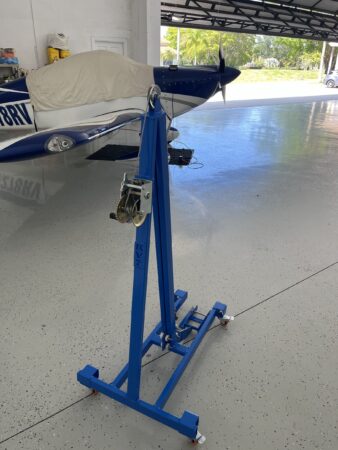
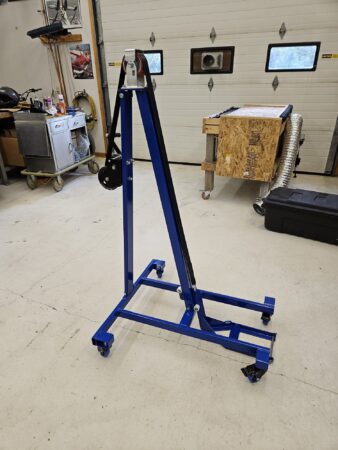
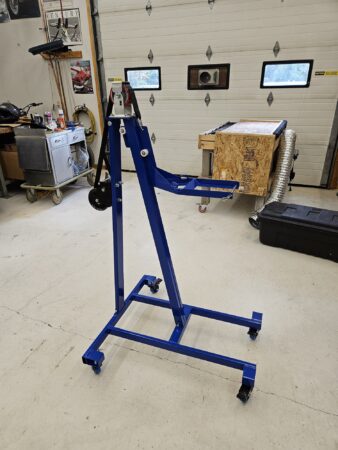
After that 10ish hours without an engine failure I figured it was time to spread my wings a bit and do a little cross country, at full power of course. I was flying in familiar territory. In my beautiful part of Alaska there are a BUNCH of airstrips available in case of an unfortunate event. Almost all are private, but I have yet to meet anyone that would not welcome a pilot in immediate need of a short, semi-flat surface. So my next 15 hours were spent doing cross country flights, at altitude, at close to full power. At 25.4 hours it was time for a another oil change and a good look over of the airframe. In addition to the oil change, I did a mini condition inspection as most of the important parts on the airframe and controls are hidden behind panels and can’t be seen on a preflight. I built a tail stand and calibrated my oil dipstick in the 3pt attitude and verified the factory stamped level attitude markings.
So what are my takeaways and what did I learn? First and foremost I always did a good preflight and a very thorough post-flight after every flight. On one post-flight I discovered the inlet fitting of the oil cooler started leaking. Everything stopped until it was fixed. I also maintained a meticulous log of the engine parameters. Even at the top end of the performance envelope, flying in circles can get pretty boring. Every flight I recorded the OAT, engine oil temperature, oil pressure, each cylinders EGT and CHT (Number 2 has always been my hottest), fuel flow, volts and amps. During my cross country flights I experimented with how minor trim settings affected level flight and always tried to keep my altitude within 50 feet of my target altitude. BTW, my BH can be trimmed to fly hands-off in smooth air, no heavy right wing as some have experienced. I feel very fortunate in that area. I also have a real-time CO detector in the cockpit and I recorded those readings as well. I never saw more than 1 PPM in level flight and 8 PPM maneuvering. I also took note of the differential between the level of the fuel tanks after refueling. I always flew with both tanks selected and never had more than 1 ½ gallons differential between the two at refueling.
One thing that took me off-guard a bit was making the transition from fabrication mode to maintenance mode. I built this thing, now I have to maintain it. It’s a completely different set of skills! I started a list of deferred maintenance items to “fix” during my next condition inspection. They are all minor, but should be resolved.
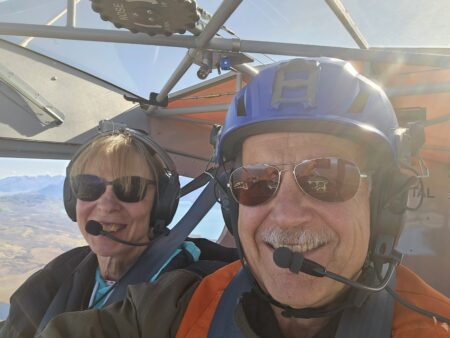
Now that I am satisfied that the engine is broken in and the aircraft doesn’t exhibit any control anomalies, I will start and complete the EAA flight test checklist. I feel it is very important to do the methodical testing and documentation of the aircraft. But, like I said before, this is a tried and true design and the first few hours didn’t exhibit any builder-induced surprises, so I was comfortable in getting the engine properly broken in before going any further. As an aside, I legally took up my first passenger the other day…my wife! The day was stunning. It was completely clear, light wind and the fall colors of the birch and aspen against the turquois blue of the Kenai River were amazing. Even Denali (formerly Mt. McKinley) was in full view in spite of it being over 150 miles away. “Don’t give in, don’t give up.” – Iwai Makoto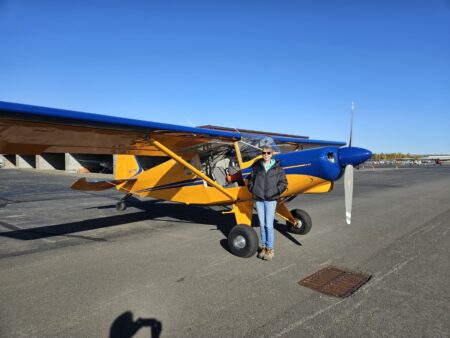
Control Locks:
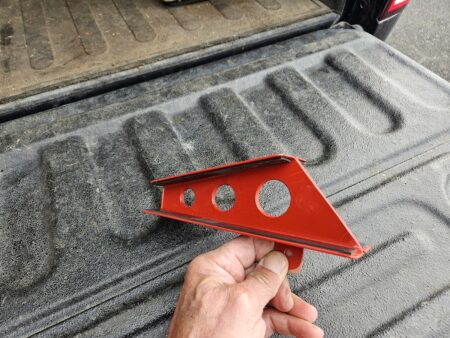
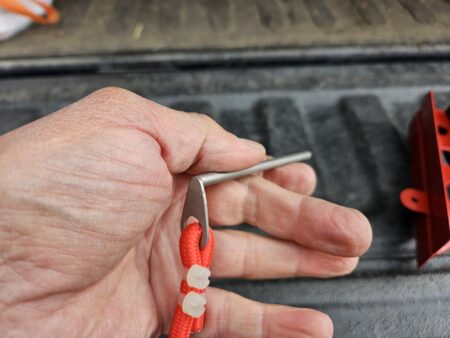
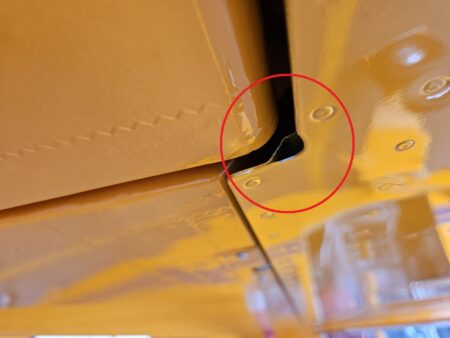
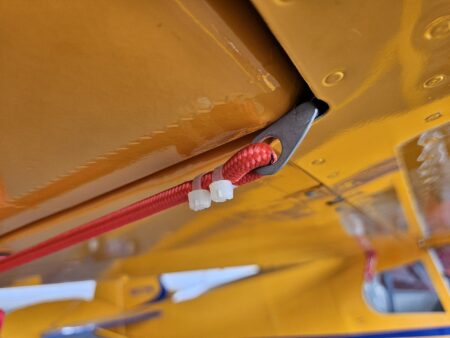
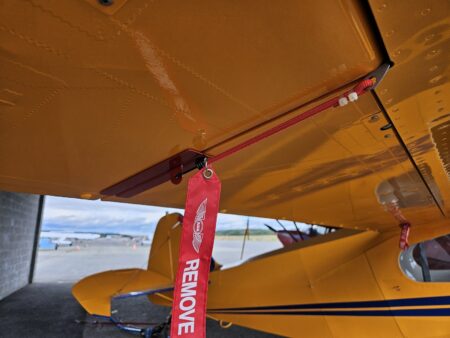
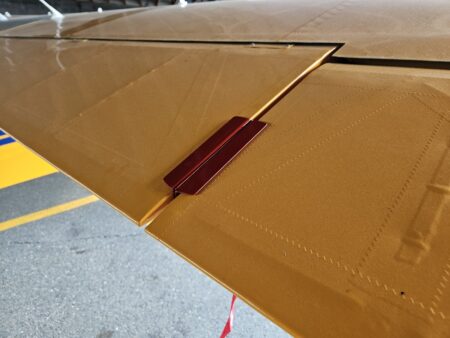
I want to share what I made for the 4-place BH. Yes, they look almost identical to the Atlee Dodge gust locks because that’s where I got the idea from. I would have bought them from Atlee, but I wasn’t sure if the profile angle of the Piper aileron/flap matched the angle of the BH control surfaces. Also, the bungees holding the Atlee locks in place wrap around the lift strut of the Piper. That isn’t an option for the BH as the lift strut is way out of alignment with the aileron/flap intersection. I looked at ways to attach a bungee and almost settled on drilling a hole in the bottom of the wing somewhere close to the edge and installing a small eye bolt. I spent a lot of time just thinking about options when saw a little hole in the wing that is created by a stiffener that is riveted to the trailing edge of the flap pocket. I tried out different diameters and lengths of rods and found one that slid in and out without any trouble.
I made the pins and the eyes welded to the end of the pins out of stainless steel so they wouldn’t rust. I made the locks themselves out of some scrap .060 5052 that I had in my now vacant shop and glued some neoprene strips on the surfaces that contact the fabric. A couple of red bungees, flagging and some zip ties later I have a set of gust locks!
I have a set of Air Gizmos gust locks that I was using for the flaps, but I had to still tie the stick back. Also, there were a couple of times I found the gust lock on the ground when it had worked itself loose. The Air Gizmo lock works great as long as the surfaces are close to parallel. So instead of buying another set for the elevator, I made these and am now using the ones I had for the flaps on the elevator. Now everything is tight and I don’t have to use the seat belt to tie the stick back.
Tail Lift:
Kevin Deutscher’s “Ursa Buteo” N272DG First Flight in Chandler, AZ
Source: 2024 Q3 Beartracks, Jared Yates
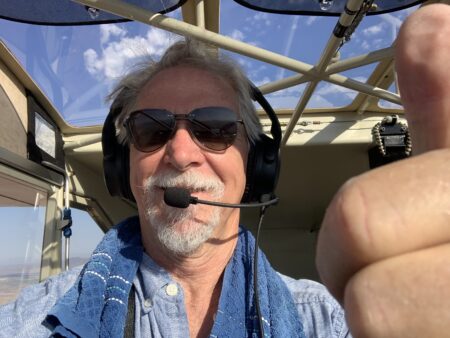
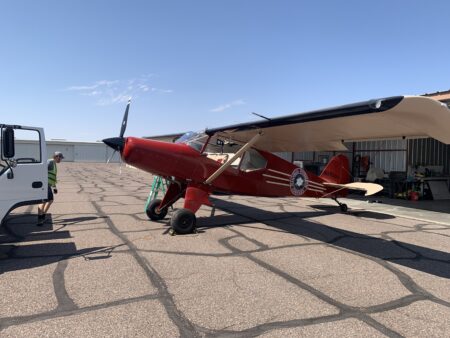
This is the newsletter of the Bob Barrows airplanes, but this quarter we’re going to include a very Bearhawk-proximate project because its builder has been a long-time friend and contributor to the community and many folks know him and the project. Kevin calls it an “Ursa Buteo”. “Ursa” is the Latin root for “Bear” and “Buteo” is the name of the genus that includes hawks.
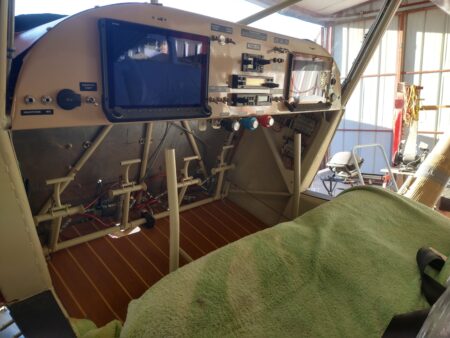
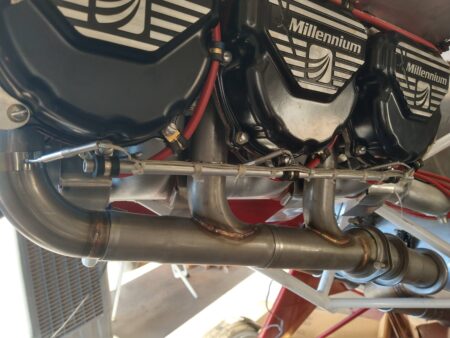
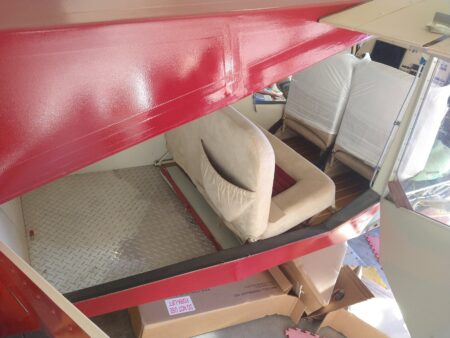
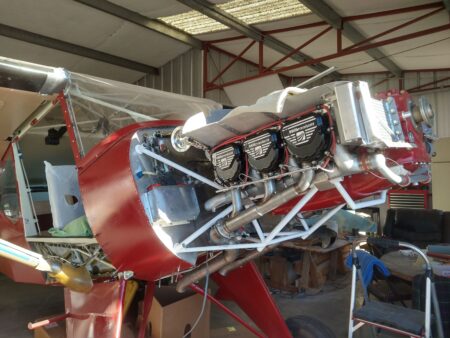
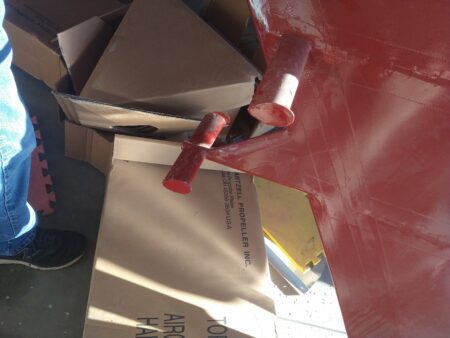
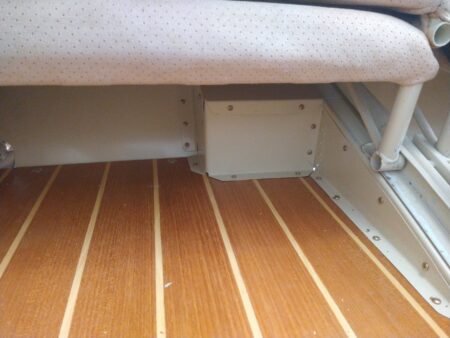
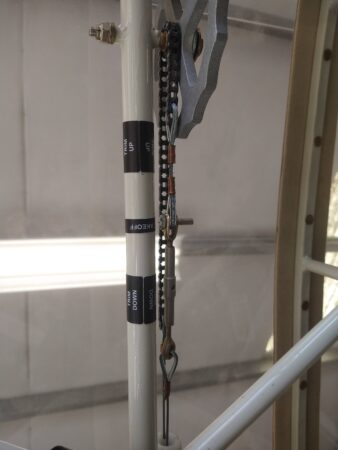
23 years ago, Kevin started work on what would become a stretched, widened, and long-gear version of the Bearhawk. Back then, the Bearhawk Five was not an option, and these days it would be interesting to park the two planes side-by-side to compare measurements. Whenever anyone starts talking about “just making a few changes” to the design of a plane, red flags and alarm bells should go off if those changes include anything like stretching, widening, or lengthening the gear! This is a “probably shouldn’t try this at home” case, but Kevin has the engineering chops to do it right. He designed the new fuselage with the same techniques that Bob would have for a new design, analyzing the strength requirements and capabilities of each tube and cluster in the structure. The landing gear is tall enough that it needs two steps! The wings are not substantially changed from those on an original Bearhawk, though Kevin did create his own composite wingtips. A project of this scope required fabrication of several custom parts. The design became known informally as the “Desert Bearhawk” and a few renderings floated around with an M14 radial engine. In this plane, Kevin used a Continental IO-470 which he assembled himself. He had experience with Continental assembly in a previous job. The prop is a big composite 3-blade Hartzell. The panel is built around the Dynon HDX system and the paint and fabric are Stewarts System. The airframe is full of small features that show a high attention to detail; I hope you are able to see it one day!
Bearhawks at Airventure 2024
Source: 2024 Q3 Beartracks, Jared Yates
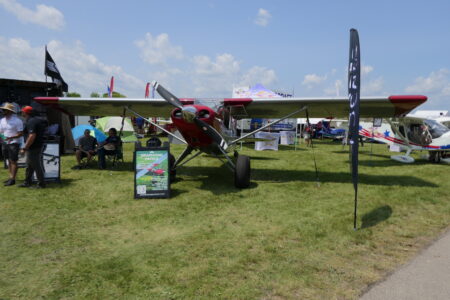
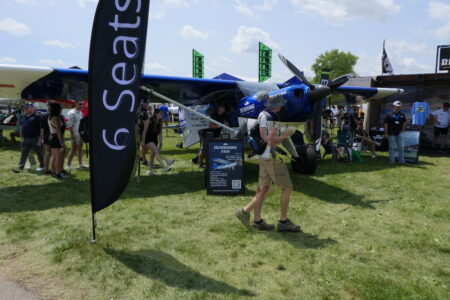
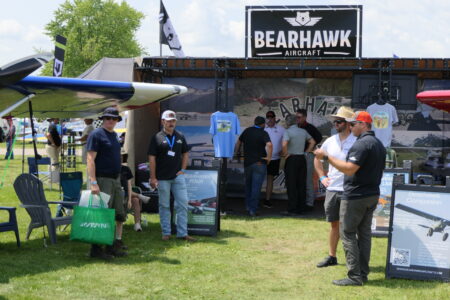
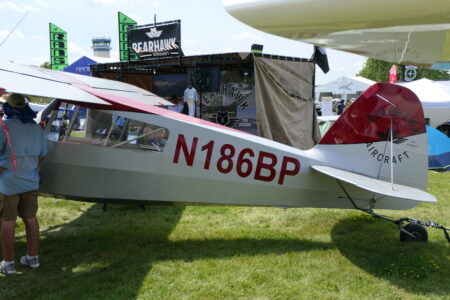
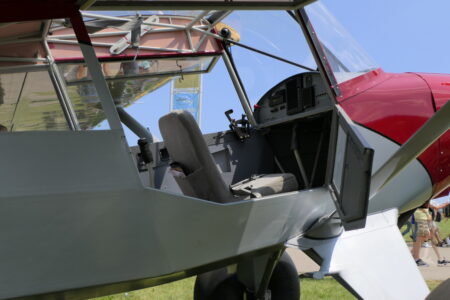
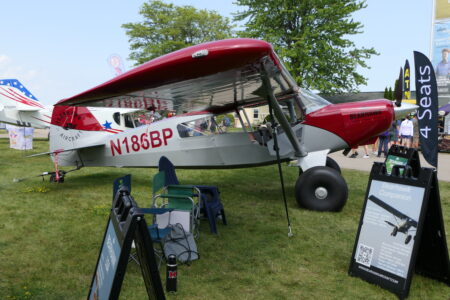
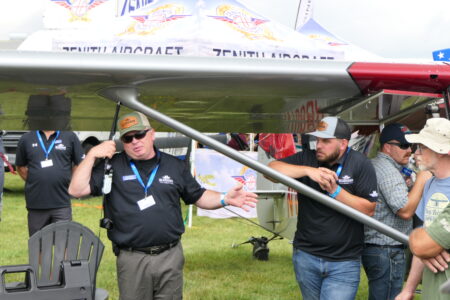
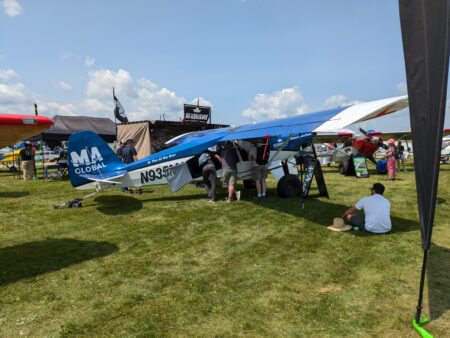
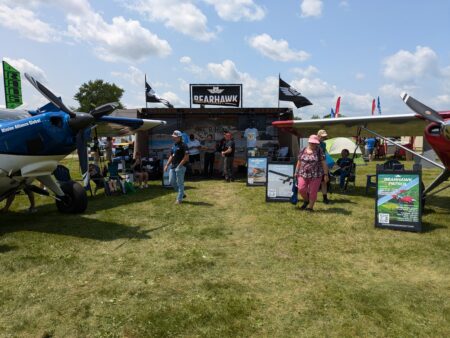
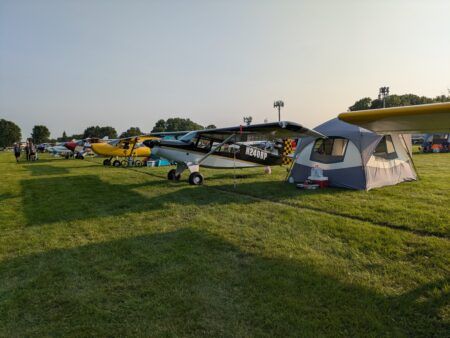
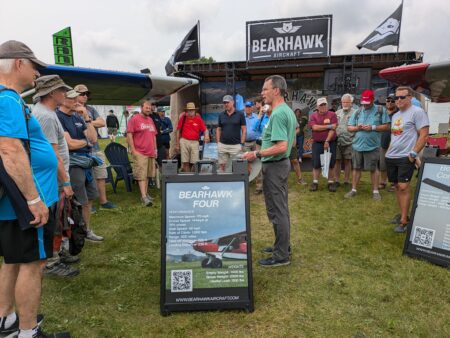
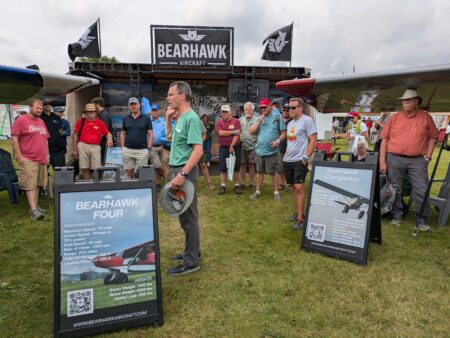
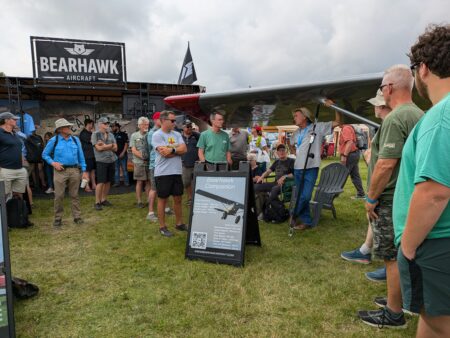
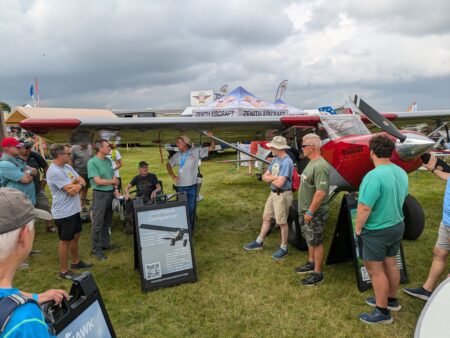
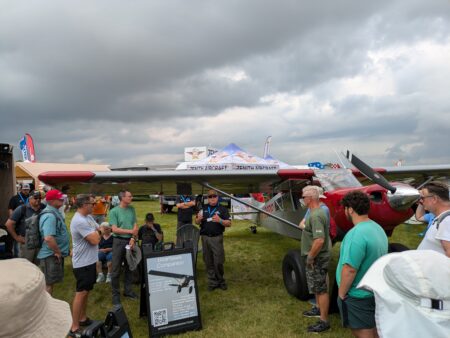
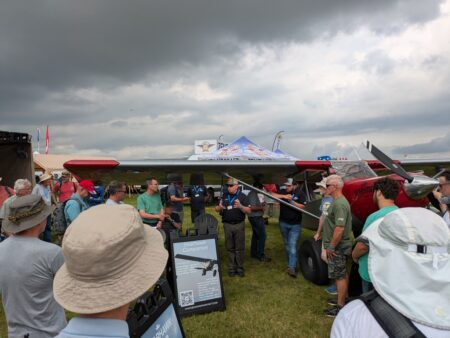
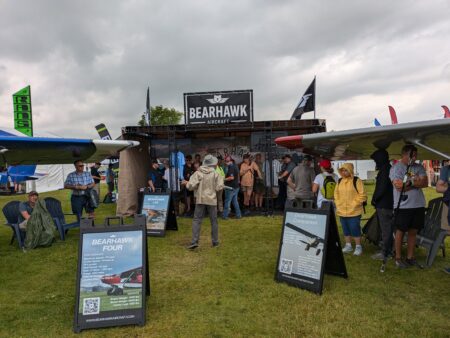
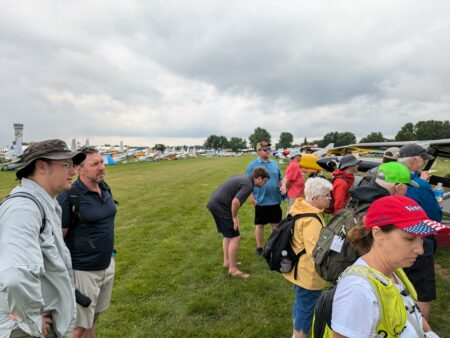
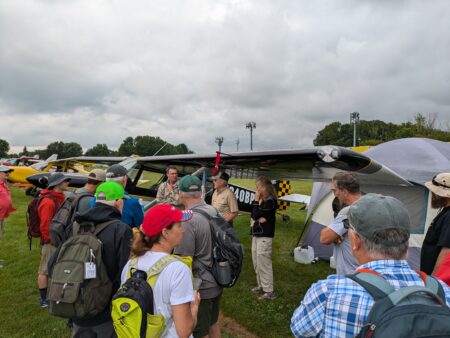
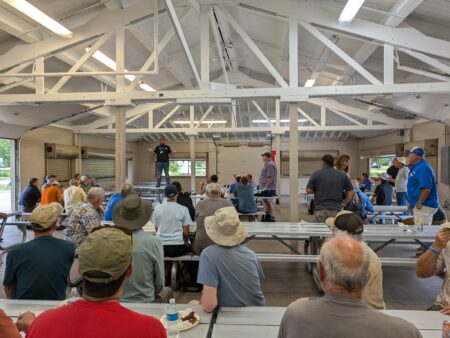
As you can tell from George’s story, this year was not an easy year to get to Oshkosh. We elected to drive, based on low clouds and rain over the mountains just north of us. There were a few folks who made it to the show to display their planes! Donna and Dennis flew their Patrols over from Oregon, and parked in Homebuilt Camping. Brooks Cone hosted another Bearhawk walk, which started at the newly-branded Bearhawk Aircraft booth Kudos to Brooks for taking the initiative to host the walk and also to get it onto the official Airventure schedule! As the words began to sprinkle forth, so did the rain, and within a few minutes we were all huddled under wings and tents waiting out a classic summer downpour. A little setback never stifles the kind of enthusiasm it takes to build an airplane, so after a few minutes we were on our way to HBC to visit Donna and Dennis.
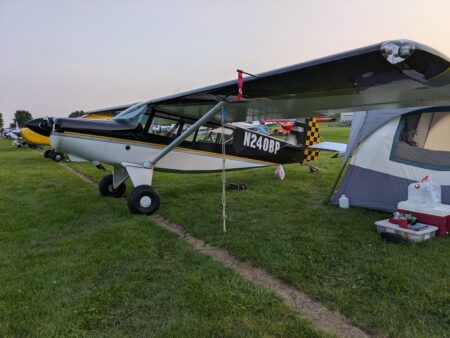
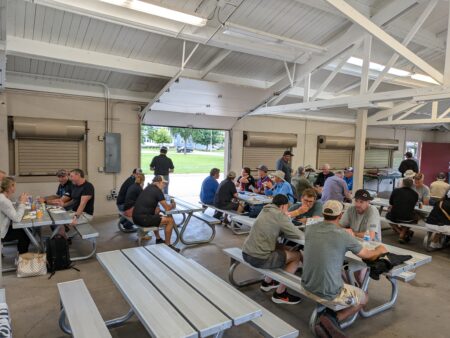
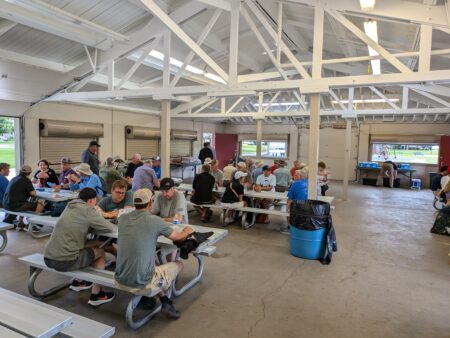
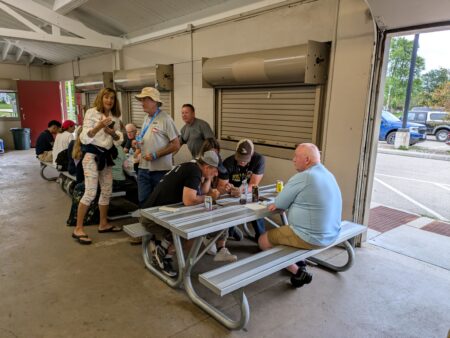
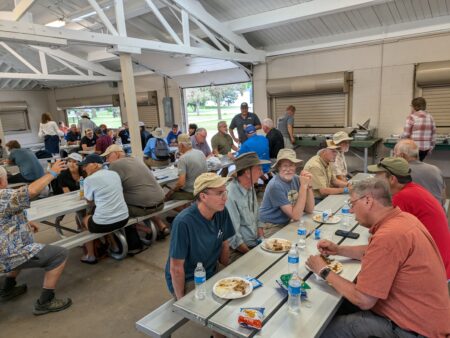
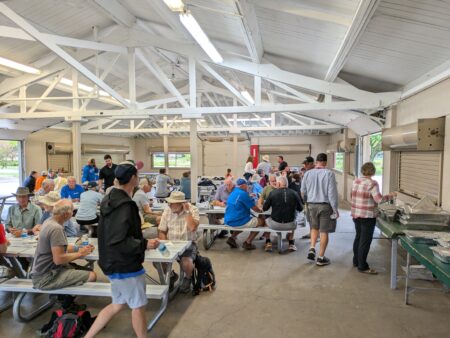
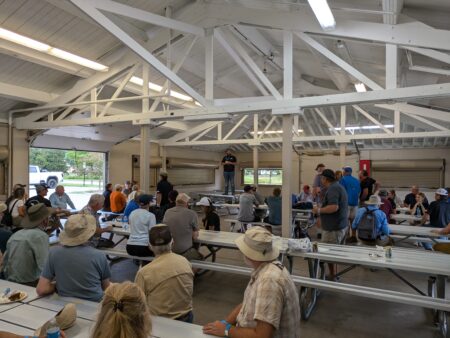
As usual they were excellent hosts. They have around 800 hours on their airplanes, though the rate of accrual has been slower than they would like due to weather, health, and the rest of life being in the way. This year we had two special guests from New Zealand, Nev Bailey and Murray Patterson. Murray flies the white Bearhawk 4-Place originally built by the late Lars Fellman. They didn’t bring their airplanes, which we will excuse due to the unavailability of fule by-the-liter in the USA, but it was great to meet them both in person. Later that night Virgil and his team hosted a fantastic chicken dinner at the park just north of the airport. There were several Bearhawk faces, both familiar and new. On the topic of long-distance travellers, Paul O’Donnell was on hand from Ireland with updates about his Bearhawk 4-Place build and his tour of the UL Engines factory in Poland.
Our family had to leave to get back home before the weather allowed George to arrive with his airplane, but as far as we know, his Plans Champion Bronze Lindy is the most prestigious Airventure award received by a Bearhawk to date.
During the dinner Virgil shared a few words about what he’s been up to with the Bearhawk Kit business and it is all exciting and good news. He has expanded OEM relationships to include a more broad range of airframe and powerplant components, and also plans to expand offerings like cabin interior parts and upholstery.
Lamar Wallace’s First Flight – Bearhawk 4-Place N845W
Source: 2024 Q3 Beartracks, Lamar Wallace
First flight for the plane, first flight out of Merrill field. R&B io540 engine. Taxi to 25 for the Shoreline departure. Delayed for arrivals then cleared for takeoff and told to expedite. Shocking how quickly airborne. Climbed to 4500, ran the engine hard to commence the break-in. Controls rigged at 25lbs, way too stiff. Heavy left wing. Orbit around Wasilla for about 1.8 hours. Proceeded to Birchwood for fuel, 75% power really gulps gas. 1st landing, better than expected. 26″ Goodyears help absorb. After refueling, back to Merril for normal landing. No flaps used on either.
When people asked when I was going to fly it, my response was always, “Tuesday.” The year and month to be determined. It was indeed a Tuesday I flew. Work had me away for a week. When I returned, I reduced the roll and pitch tension to 15lbs. Left flap was found slightly deployed up. Right deployed down. Reversed this. Ailerons rerigged to reference wing tips. Removed cowling to verify condition and security. The next day with weather moving in, I conducted pattern work. Aircraft flew straight. It is very much a rudder airplane and need to reprogram my brain for that.
Next flight was to Palmer for circuits and pictures then back to Merrill. Drained oil, pulled both screens. Metal, rtv and Labrador’s hair all present. Cleaned screens, safety wired and added mineral oil. The following flight, orbit over Wasilla, deployed flaps. Observed normal flight. No roll. Conducted one stall clean mainly to get AOA calibration on EFIS. Conducted landings at Wasilla and taxi backs.
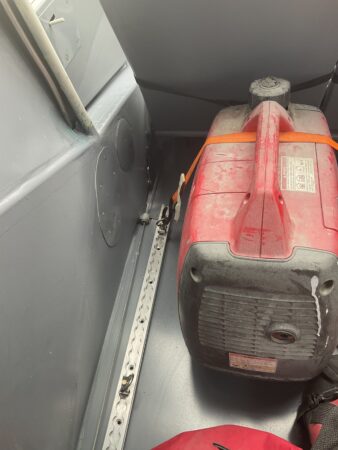
Last flight. Orbits over Wasilla. Conducted stalls with each flap setting. Full flaps, elevator full up, no break, just mushes. Around 38 knots. Circuits at Wasilla. Departed south executed 2 full procedure LPV approaches. I increased autopilots response time. Getting better. Trim is wickedly sensitive and the a/p has a hard time with it. Return to Merrill. 8.2 hours on tach. 11 on Hobbs. Excited to fly again. Again quick takeoff. Have been super conservative on landing. Other than the trim being sensitive, I haven’t found any bad characteristics. It is a pleasure to hand fly. Very pleased with the outcome. Added tie down rails and rings. The holes lined up with a little massaging for the fore and aft seat anchor points.