Using Clip-Lock Turnbuckles

You are not yet authorized to view this page. Learn more here.

Discussion about Fuel Pumps and the Fuel System

Source: 2020 Q3 Beartracks The original gravity-only Bearhawk fuel system design is very robust when it can be used. This is important, because lots of homebuilts suffer fuel flow problems. However, some engine installations require fuel pumps, and when using pumps, there are some extra considerations. In August Bob issued an “Operation Notice” as follows: The Bearhawk Fuel System as shown in the Bearhawk Book is designed for use without a fuel pump. If a fuel pump is used, extra care in flying is required so that neither main tanks become unported, as a fuel pump would rather suck air than fuel. If one tank is very low and the other is not very low, set the fuel selector on the fullest tank and fly the plane as not to unport that tank. A header tank (3 gal) could be used to solve this problem, but fuel in the cockpit can be a safety issue. (Vent the header tank to both main tanks). There has been an extensive discussion about this topic at bearhawkforums.com, including a discussion about venting one tank to the other, header tanks, and much more. I think it is fair to say that there is not a consensus about fuel management in cases where the system includes a fuel pump. One data point from Ed Meyer in Idaho is below: As some of you know, we have a Patrol with the EFII ignition and injection system which includes fuel pumps (main and secondary) to boost fuel pressure up for the injectors. Also, return lines were installed to return the excess fuel from the continuously running pump. All the details of our system installation in the Patrol are in a Bear-tracks article I wrote a while back. Not knowing positively whether un-porting of the fuel outlets on one tank would allow air to enter the fuel system and starve the injection system,a concern expressed in this thread; I decided to do a test: I flew up over my home airport about 4500 AGL with about 9 gallons of fuel in each side. I was using a cruise pow-er setting with about 8GPH fuel flow showing. I turned the fuel valve to the right tank (I usually run both) and then put the right wing low in a pretty hard slip/skid to intentionally un-port the fuel outlets. I expected that fuel pres-sure would quickly drop and the engine would quit. After about 10 seconds or so, the fuel pressure did drop and the automatic switching to the secondary fuel pump occurred but the pressure stayed low. At this point I knew I had succeeded in un-porting the fuel outlets on that side. I then went back to normal coordinated flight and the fuel pressure slowly recovered in about 10 - 15 seconds. Much to my surprise, the engine never missed a beat through this. Following this, I switched the fuel selector to both and again did the right wing low slip/skid. I held this for probably about two minutes monitoring the fuel pressure closely. It never wavered in the slightest. My conclusion from this is that there is apparently enough fuel flow capacity feeding from only one tank via 3/8" lines to supply all the fuel the engine needs plus whatever amount the fuel regulator returns to the tank even with the other tank feed open to the vent. I recognize that this is not an exhaustive test but it was enough to boost my confidence in the fuel system as installed.

You are not yet authorized to view this page. Learn more here.

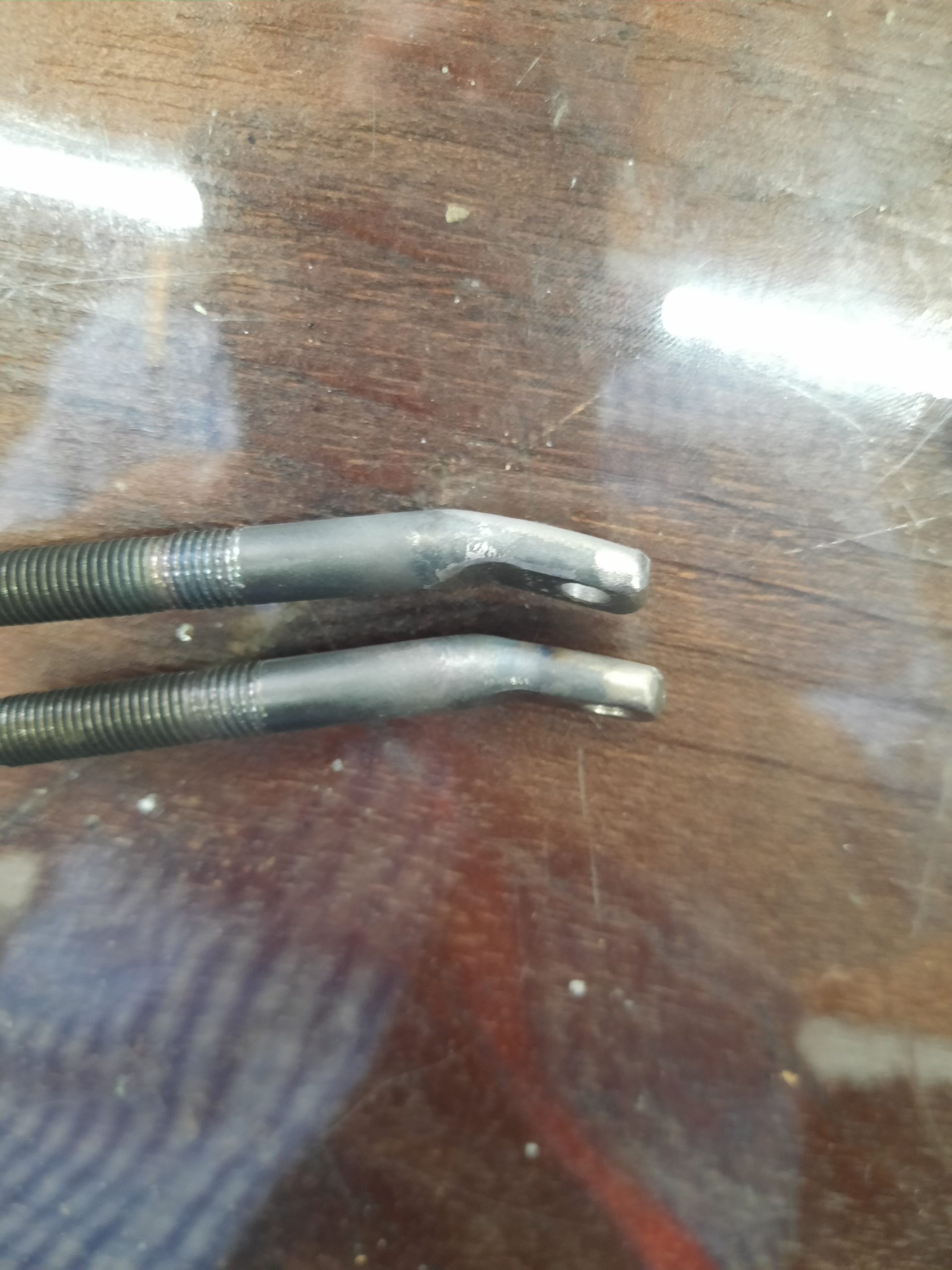
Service Notification for Patrol and LSA Kit Tail Struts

Bearhawk Aircraft Service Notification June 16, 2020 – For questions call Mark Goldberg, 512-626-7886 The horizontal stab strut for the Patrol and LSA share a common design feature on the top – how they are attached to the leading edge tube of the horizontal stab. An AN5 bolt has its head removed, and it is heated and forged flat with the 3/16” hole drilled for attaching to the horizontal stab with an AN3 bolt. The factory also cuts some more threads to add additional adjustment length. Some of these parts have left the factory improperly forged. The forged part (where the 3/16” hole is) needs to be flat so it fits flat against the bottom of the horizontal stab tube and also have the nut on the bottom fit flat. The parts not forged properly have an angle to them and are not flat on both sides. This can put stress on the AN3 bolt. There are two ways to fix this part if you have one or two that are not forged flat. One side can be ground down flat on a bench grinder if the remaining material is at least 1/8” thick. Of course any roughness or marks from the grinding would need to be polished/sanded out. Bob Barrows does a different fix for a situation like this that requires welding. A washer is tack welded to the “fatter” side of this part where the attach hole is. Then the other side of this washer is adjusted so it is flat compared to the other side. Then finish welded in place. Please inspect these parts that came with your Patrol or LSA kit. If they have this problem you should try to make the “repair” as detailed above. If you are unhappy with the result for any reason, let us know and we will replace these for you.